
Epoxy vs. Tile Flooring for Kitchens: Which Holds Up Better?
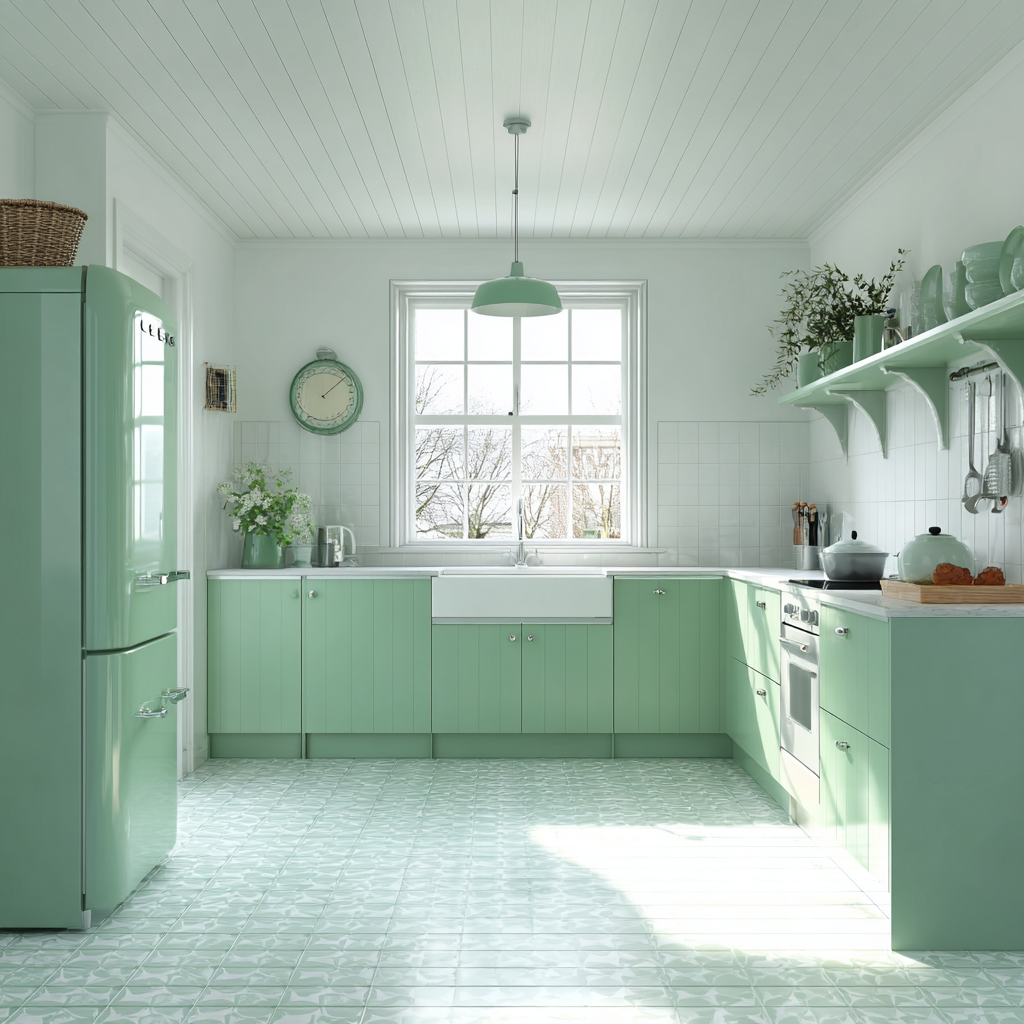
If you’ve been researching kitchen flooring, you’ve landed on both epoxy and tile. They share some surface-level appeal: both can look sleek and modern, both are easy to clean, and both show up in high-end kitchen renovations. But once you get past the photos, they’re very different products with very different real-world track records.
This guide breaks down the epoxy vs. tile flooring for kitchens comparison for kitchens across every factor that matters: aesthetics, durability, installation, maintenance, cost, and comfort. By the end, you’ll have a clear picture of which option fits your home, your lifestyle, and your budget in Western North Carolina.
What You’re Actually Comparing
Before getting into the specifics of epoxy vs. tile flooring for kitchens, it helps to understand what each product actually is.
Epoxy kitchen flooring is a two-part poured coating — a resin and hardener mixture applied over a concrete or prepared subfloor. It cures into a hard, glossy, seamless surface. The look can range from solid colors to metallic swirls to faux marble, and the seamless finish is its most distinctive quality. It’s been used in commercial kitchens, garages, and industrial settings for decades.
Ceramic and porcelain tile are kiln-fired clay products cut into individual pieces and installed with mortar and grout. Porcelain is denser and harder than ceramic, with lower water absorption rates — making it the standard recommendation for epoxy vs. tile flooring for kitchens and wet areas. Tile has been a proven kitchen surface for centuries, from farmhouse renovations to contemporary urban builds.
The comparison between epoxy vs. tile flooring for kitchens comes up most often when homeowners are drawn to the seamless, poured look of epoxy but want to understand what they’re giving up (or gaining) compared to a more traditional material.
Aesthetics: Who Wins the Look?
Epoxy has a genuine edge in one specific aesthetic category: the seamless floor. No grout lines, no visible seams, and the ability to achieve custom poured effects — metallic finishes, marbled patterns, swirled pigments — that tile simply can’t replicate. For homeowners going for an ultra-modern, industrial-chic kitchen, epoxy vs. tile flooring is a real debate.
One place tile wins definitively: color stability. Epoxy vs. tile flooring for kitchens becomes a no-contest when UV exposure is a factor. Standard epoxy formulas yellow when exposed to natural light over time — sometimes within a year or two in a kitchen with windows. Porcelain tile holds its color indefinitely.
If you want to see how modern tile can achieve that clean, minimal look, the tile flooring options at our showrooms include large-format porcelain in finishes that rival the poured aesthetic of epoxy kitchen flooring.
Durability: Which Floor Lasts Longer?
This is where the epoxy vs. tile flooring for kitchens comparison gets straightforward. Tile wins — and it’s not particularly close.
Properly installed porcelain tile can last 30 to 50 years. It’s scratch-resistant, doesn’t dent, doesn’t yellow, and individual tiles can be replaced if one chips or cracks without redoing the entire floor. The Tile Council of North America notes that ceramic and porcelain tile have one of the longest lifespans among flooring categories, often outlasting other home renovations (TCNA, 2024).
For the epoxy vs. tile flooring for kitchens durability comparison, tile is the clear long-term choice for a kitchen that sees daily use.
Installation: What the Process Actually Involves
Installation is one of the biggest practical differences between Epoxy vs.Tile flooring for kitchens, and it’s often underestimated.
Epoxy installation requires the subfloor to be perfectly clean, dry, level, and free of previous coatings. In many WNC homes — particularly those with concrete slabs, crawl space foundations, or older construction — that means moisture remediation, grinding, and priming before a single coat goes down. Mixing ratios matter, ambient temperature and humidity affect curing, and the application window is narrow. A rushed or improperly mixed application can result in bubbling, peeling, or adhesion failure. The kitchen is completely out of service during application and curing, which can take 3 to 5 days or more.
Tile installation is also a professional job for best results, but it’s a well-understood trade skill with a defined process. An experienced tile installer can complete a standard kitchen in one to two days, depending on size and layout. The kitchen is typically usable again within 24 to 48 hours after grouting. Large-format tile jobs require more precision, but the risk of catastrophic installation failure is much lower than with epoxy.
Epoxy vs. tile flooring for kitchens need a solid, level subfloor. But epoxy’s sensitivity to moisture and temperature during application makes it a higher-risk install in the WNC climate, where seasonal humidity swings are a consistent reality.
For questions about what the installation process looks like in your specific home, our team at Leicester Flooring’s Asheville and Hendersonville showrooms can walk you through what to expect before the work starts.
Maintenance: Day-to-Day Reality
Both epoxy tiles get marketed as easy-to-clean surfaces, and both are, in different ways and with different long-term considerations. In the epoxy vs. tile flooring for kitchens comparison, the day-to-day maintenance is roughly equal, but the long-term maintenance picture is very different.
Epoxy daily maintenance is simple: sweep and damp mop. The seamless surface has no grout lines to trap dirt, which is a genuine advantage. However, that glossy finish shows every smudge, footprint, and dried water spot. Cleaning frequency in a kitchen — a room that generates daily grease, steam, and spills — is higher than most homeowners anticipate. Harsh cleaners can dull the finish.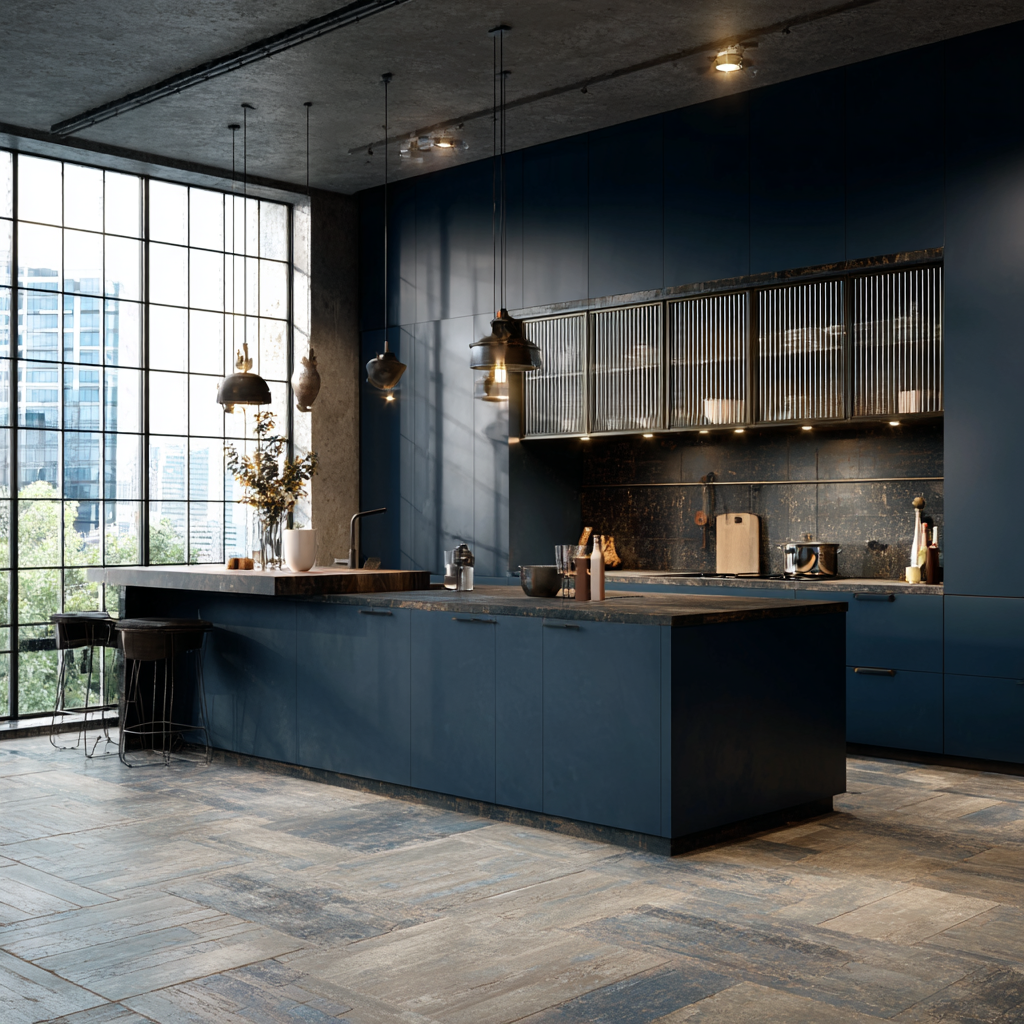
Tile daily maintenance also involves sweeping and mopping, with one known friction point: grout lines. Grout can stain and discolor over time, particularly in kitchens where grease and food particles are present. That said, modern epoxy-based grouts (note: different from floor epoxy — this is grout filler) are highly stain-resistant and far more manageable than the cement grouts used in older installations. Sealing grout annually significantly extends its life.
Where the comparison shifts decisively: long-term maintenance. Tile needs cleaning and occasional grout sealing. Epoxy needs periodic professional re-coating — typically every 3 to 10 years, depending on use — which involves the same intensive prep and curing process as the original installation. That’s a recurring cost and disruption that tile simply doesn’t have.
Comfort and Safety: What It Feels Like to Use the Floor
Two practical factors in the epoxy vs. tile flooring for kitchens comparison often get less attention than they deserve: comfort underfoot and slip resistance.
Hardness. Both epoxy and tile are hard surfaces — there’s no cushion, no give, and no insulation from the subfloor. That said, tile installed over a wooden subfloor has slightly more flex than epoxy poured directly over concrete. For anyone who spends significant time standing in the kitchen, both surfaces cause fatigue over a long cooking session. Anti-fatigue mats help with both, but neither material is naturally forgiving on joints.
Warmth. Both surfaces are cold underfoot in winter. Tile has a strong advantage here if radiant floor heating is part of the renovation plan — tile conducts heat efficiently and is one of the best surfaces for in-floor heating systems. Epoxy over concrete can also be paired with radiant heat, but the heat transfer is less consistent.
FAQ: Epoxy vs. Tile Flooring for Kitchens
Is epoxy or tile better for a kitchen floor?
For most residential kitchens, tile is the better choice. Porcelain tile lasts 30 to 50 years, handles UV exposure without yellowing, offers better slip resistance, and carries lower long-term maintenance costs. Epoxy makes more sense in commercial kitchens or spaces without natural light, where its seamless aesthetic can shine without the risk of yellowing.
How long does epoxy kitchen flooring last compared to tile?
Epoxy kitchen flooring typically lasts 10 to 20 years with proper maintenance and re-coating. Porcelain tile installed correctly can last 30 to 50 years with only routine cleaning and occasional grout sealing.
Is tile harder to clean than epoxy in a kitchen?
Day-to-day, they’re comparable. Epoxy’s seamless surface has no grout lines, which simplifies sweeping. But the high-gloss finish shows smudges and footprints readily. Tile with modern epoxy grout is easy to maintain with regular mopping and annual grout sealing. Over time, tile’s maintenance requirements are lower because there’s no re-coating involved.
Which is more slip-resistant — epoxy or tile?
Epoxy vs. tile flooring for kitchens with a matte or textured finish offers significantly better slip resistance than polished epoxy. In a kitchen where water, grease, and steam are regular factors, traction matters. Anti-slip additives can reduce epoxy’s slip risk but also reduce its aesthetic appeal.
Can you put tile over an existing floor?
In many cases, yes — tile can be installed over existing vinyl, tile, or concrete subfloors that are structurally sound and level. This is one of tile’s practical advantages. Epoxy installation requires a properly prepared, moisture-managed concrete subfloor, which often means more extensive prep in older or existing homes.
Which One Is Right for Your Kitchen?
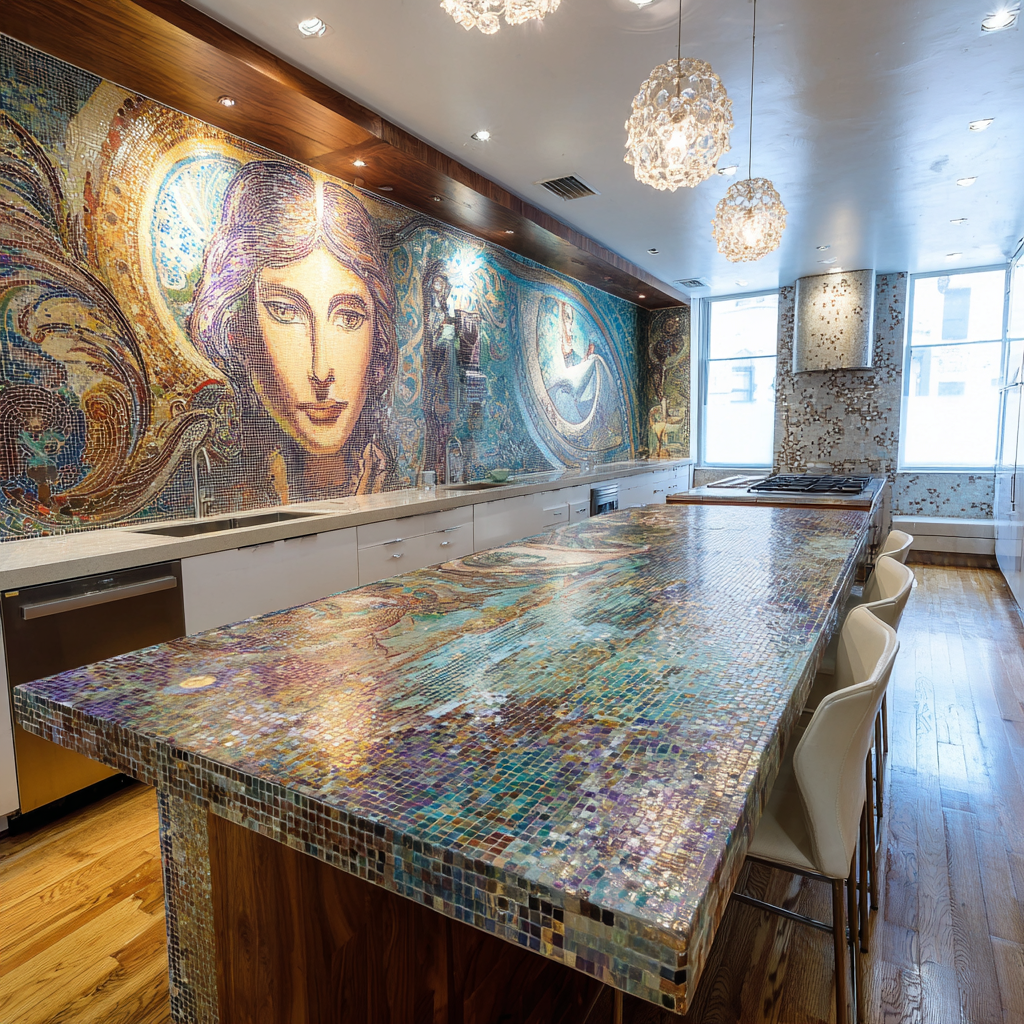
The epoxy vs. tile flooring for kitchens decision comes down to what you’re prioritizing. If you want a truly seamless, custom poured look and you’re working with a professional in a kitchen with minimal direct sunlight, epoxy can be a reasonable choice. But for most WNC homeowners — dealing with mountain humidity, existing subfloor conditions, and the practical realities of daily kitchen use — tile delivers a better combination of durability, safety, and long-term value.
If you’re weighing other alternatives, our complete guide to kitchen flooring options covers the full spectrum of materials, including luxury vinyl plank and laminate, as well as tile. For a direct look at how tile compares to LVP specifically, the vinyl vs. tile flooring comparison is a useful next read. And if waterproof performance is a top priority, the waterproof flooring comparison breaks down how each material handles moisture over time.
We’ve been helping Asheville and Hendersonville homeowners choose the right kitchen floors since 1971. Our non-commission sales team is here to give you honest guidance — not push you toward the most expensive option. Schedule a free in-home measure, and we’ll come to you.