
LVP Flooring Stain Removal Guide: How to Clean Any Mess Without Wrecking Your Floors
Key Takeaways
- Act fast: most stains on LVP are easy to remove when addressed within minutes
- Water-based stains (juice, wine, coffee) wipe away with a damp cloth and approved cleaner
- Oil-based stains (grease, cooking oil, crayon) require isopropyl alcohol or mineral spirits
- Never scrub LVP with abrasive pads, steel wool, or harsh solvents like acetone
- Luxury vinyl plank’s wear layer is stain-resistant but not stain-proof when improper cleaners are used
One of the biggest selling points of luxury vinyl plank flooring is how well it handles real life. Spilled coffee before work, muddy paws after a rainy hike in the Blue Ridge, crayon discoveries from the five-year-old, grease that jumped off the skillet on a Sunday morning. LVP handles these better than almost any other flooring type. But “handles it well” still means you need to know what to reach for when something lands on the floor.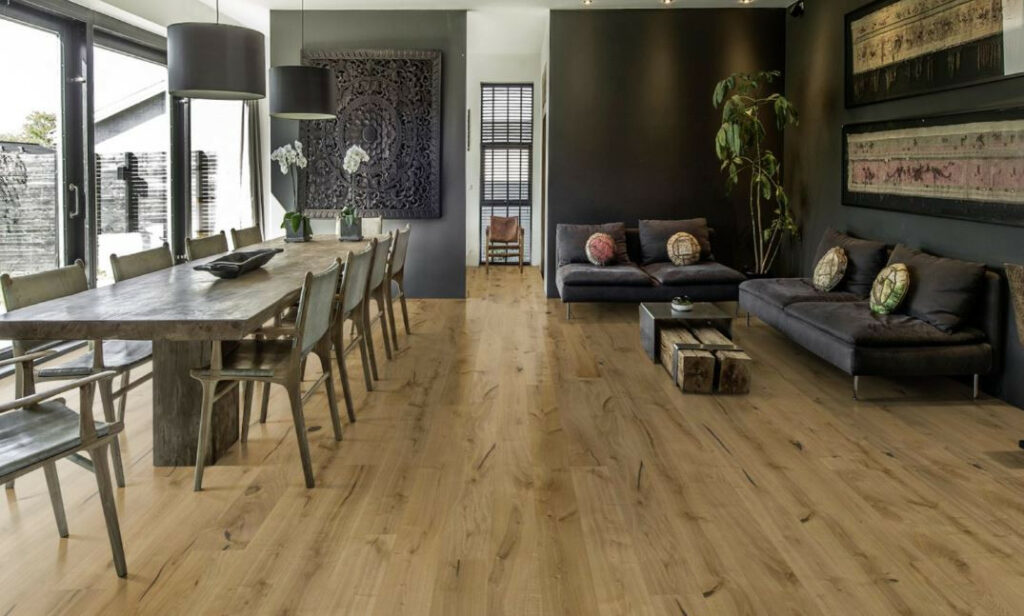
The wrong response to a stain can cause more damage than the stain itself. Scrubbing with abrasive pads, pouring on bleach, or letting vinegar sit on the surface while you Google solutions are all common mistakes that end up harming the wear layer. This guide walks through every major stain category so you know exactly what to do, and what not to do, when a mess happens.
The Two Categories That Drive Everything
Every stain removal approach on LVP starts with identifying what kind of stain you’re dealing with. There are two categories:
Water-based stains: Coffee, juice, wine, soda, most food spills, pet urine, blood, and mud. These are generally easier to clean and respond well to a damp cloth and an approved pH-neutral LVP cleaner.
Oil-based stains: Cooking grease, butter, salad dressing, crayon, lipstick, shoe polish, tar, motor oil, and similar substances. These do not respond well to water alone and usually require isopropyl alcohol or a small amount of mineral spirits on a cloth.
When in doubt, start with the gentler method (water-based approach) and escalate only if it doesn’t work.
The Universal First Steps
Before reaching for any product, two steps apply to almost every stain situation on LVP:
1. Act fast. LVP’s wear layer is non-porous, which means liquids sit on the surface rather than soaking in immediately. This gives you a window to clean before anything bonds. The longer a stain sits, the harder it becomes to remove without harsh chemistry.
2. Blot, don’t rub. For liquid spills, blot with a clean dry cloth or paper towel to absorb as much as possible before introducing any cleaner. Rubbing spreads the stain and works it into the texture of the wear layer.
For solid or semi-solid messes like gum, wax, or dried food, soften or harden the material first (details below) before attempting removal.
Water-Based Stains: Coffee, Wine, Juice, and Food
Removal approach:
- Blot up as much of the liquid as possible with a clean cloth.
- Apply a small amount of pH-neutral LVP cleaner (Shaw R2X, Bona Hard-Surface, or equivalent) to the area.
- Wipe with a clean microfiber cloth in the direction of the plank grain.
- Dry the area with a fresh dry cloth.
Most water-based stains on LVP come up completely with this method when addressed quickly. For stains that have dried and bonded to the surface, dampen a cloth with warm water and approved cleaner, lay it over the stain for two to three minutes to soften it, then wipe clean.
What doesn’t work: Vinegar is a common home remedy for food stains, but it’s acidic and will etch LVP’s wear layer with repeated contact. Our vinyl care and maintenance page covers which cleaners are safe versus damaging.
Oil-Based Stains: Grease, Butter, Crayon, and Lipstick
Removal approach:
- Blot or scrape away any excess material with a plastic scraper or the edge of a credit card. Work from the outside of the stain toward the center to avoid spreading.
- Apply a small amount of isopropyl alcohol (rubbing alcohol) to a clean white cloth.
- Blot the stain gently. Avoid rubbing in circles, which can spread the oil.
- Wipe the area clean with a damp cloth and approved LVP cleaner.
- Dry thoroughly.
For heavier oil stains like motor oil, cooking grease buildup, or tar, a small amount of mineral spirits on a cloth is more effective than isopropyl alcohol. Use mineral spirits sparingly and only on the stained area, then clean the spot with your approved LVP cleaner immediately after to remove any solvent residue.
For kitchen-specific grease management, our guide to cleaning kitchen floors covers the preventative habits and cleaning approach that keeps LVP grease-free in the room where it matters most.
Pet Accidents: Urine, Vomit, and Feces
Pet messes are high-urgency stains. Urine in particular can cause odor that bonds to the floor surface if left long enough, and it can work into seams between planks if not cleaned promptly.
Removal approach:
- Remove any solid material first with paper towels or a disposable cloth. Fold the cloth in rather than swiping across the floor.
- Blot up liquid with clean dry cloths until as much as possible has been absorbed.
- Apply an enzyme-based pet cleaner rated safe for vinyl flooring. Enzyme cleaners break down the urine proteins that cause odor, which standard floor cleaners cannot do.
- Allow the enzyme cleaner to sit for the time specified on the product label (usually five to ten minutes).
- Wipe clean with a fresh damp cloth and allow to dry.
Important note on seams: If the accident happened at a seam between planks and there’s any concern that moisture worked underneath, monitor the area for edge swelling over the following 24 to 48 hours. Our deeper article on removing pet stains and odors from LVP covers the full process, including what to do about persistent odor.
Scuff Marks
Scuff marks from rubber-soled shoes, furniture legs, or dragged objects are extremely common on LVP and easy to panic about. They almost always look worse than they are.
Removal approach:
- Try a clean pencil eraser first. This sounds minimal, but it works on many fresh scuff marks without any chemistry at all.
- If the eraser doesn’t fully clear it, apply a small amount of isopropyl alcohol to a clean white cloth and rub gently with the grain direction of the plank.
- Wipe clean with a damp cloth.
Scuff marks are surface-level contact marks, not chemical stains. They come off more easily than they look. See our dedicated article on removing scuff marks from LVP flooring for a step-by-step breakdown with more detail.
Candle Wax and Gum
Solid or semi-solid substances require a hardening approach rather than a chemical one.
Removal approach:
- Place a bag of ice cubes over the wax or gum and hold it there for three to five minutes. Cold makes these substances brittle.
- Gently break the material up with your fingers or by pressing down on it.
- Use a plastic scraper or the edge of a plastic spatula to lift the pieces away from the surface. Work in small sections and always lift rather than drag.
- Clean any remaining residue with isopropyl alcohol on a cloth, then follow with an approved LVP cleaner.
Never use a metal scraper or knife on LVP. Metal edges will scratch the wear layer instantly.
Nail Polish
Nail polish is one of the more challenging stains because it dries fast and contains pigment. Act immediately if possible.
For wet nail polish: Blot with a dry cloth to remove as much as possible without spreading. Apply a small amount of nail polish remover (acetone or non-acetone) to a cloth and blot, not rub, the remaining polish. Clean immediately after with approved LVP cleaner. Acetone in small amounts for spot treatment is generally considered safe for LVP, but do not saturate the area.
For dried nail polish: Apply nail polish remover to a cloth, hold it over the dried polish for 30 to 60 seconds to soften, then blot clean. You may need multiple applications.
Ink and Marker
Removal approach:
- Apply isopropyl alcohol (70% concentration or higher) to a clean white cloth.
- Blot the ink stain repeatedly, rotating to a clean part of the cloth as you go to avoid redepositing ink.
- For permanent marker, rubbing alcohol may need to be applied and blotted several times.
- Clean with approved LVP cleaner once the ink is removed and dry thoroughly.
Paint
Whether it’s latex wall paint from a renovation project or kids’ craft paint, the cleanup depends heavily on whether it’s still wet or already dried.
Wet paint: Blot immediately with a dry cloth to remove as much as possible, then clean with a damp cloth. Most latex paint wipes away completely when still wet.
Dried latex paint: Apply warm water with a cloth to soften the paint, then peel or scrape with a plastic scraper. Follow with isopropyl alcohol if residue remains.
Oil-based paint: Requires mineral spirits. Apply sparingly to a cloth, blot the area, and clean with approved LVP cleaner immediately after.
Our detailed guide on cleaning paint off LVP flooring covers both renovation scenarios and craft accidents in more detail.
Mold and Mildew
Surface mold on LVP, typically appearing in bathrooms or basements with humidity issues, requires a measured response. If you see mold growing beneath lifted planks or along baseboards, that’s a subfloor moisture problem that goes beyond surface cleaning.
For surface mold:
- Apply a solution of diluted hydrogen peroxide (3% solution, available at any pharmacy) to a cloth and blot the affected area.
- Wipe clean with a fresh damp cloth and dry thoroughly.
- Identify and correct the moisture source. Mold returns if humidity is not controlled.
For more detail on mold removal and when it signals a bigger problem, see our full article on cleaning mold and mildew from LVP flooring.
Western NC’s mountain climate brings significant seasonal humidity swings that can contribute to moisture issues in basements and crawl spaces. Our guide on moisture-resistant flooring options for Asheville homes discusses how to choose and care for flooring in high-humidity environments.
Products to Keep on Hand
A well-stocked cleaning supply list for LVP stain emergencies:
- pH-neutral LVP cleaner (Shaw R2X or Bona Hard-Surface)
- Isopropyl alcohol (70%+)
- Enzyme-based pet cleaner rated safe for vinyl
- Mineral spirits for oil-based stains (use sparingly)
- Plastic scraper or old credit card
- White microfiber cloths (colored cloths can transfer dye)
- Ice packs for wax and gum
When a Stain Won’t Come Out
If a stain resists every appropriate cleaning method, check your manufacturer’s warranty documentation before attempting anything more aggressive. Some warranties include stain resistance coverage that may apply. Contact the flooring manufacturer’s customer service line for guidance specific to your product.
If the floor surface is physically damaged rather than stained, a single plank replacement may be an option. For floating click-lock LVP installations, individual planks can sometimes be removed and replaced without disturbing the surrounding floor. For glue-down installations, replacement is more involved. Contact our team at Leicester Flooring if you’re dealing with damage that goes beyond stain removal, and we’ll help you assess your options.
Key Takeaways: Bottom Summary
LVP stain removal comes down to acting quickly, identifying whether the stain is water-based or oil-based, and using the right product for the job. Blot rather than rub, use pH-neutral cleaners for most everyday stains, and reach for isopropyl alcohol or mineral spirits only when needed for oil-based messes. Keep abrasive tools, bleach, and vinegar away from LVP at all times. With the right approach, most stains on luxury vinyl plank come up cleanly and leave no trace. Visit our Asheville or Hendersonville showroom for product recommendations specific to your floor.
Frequently Asked Questions
How do I clean dried food off LVP flooring?
Let warm water and a small amount of approved LVP cleaner soften the dried food for two to three minutes, then scrape gently with a plastic scraper and wipe clean. Avoid metal tools and abrasive scrubbers.
Can you use hydrogen peroxide on LVP flooring?
A diluted 3% hydrogen peroxide solution is generally considered safe for spot treatment on LVP, particularly for disinfection or mold removal. Do not use concentrated hydrogen peroxide, and always wipe clean with a damp cloth after treatment.
Why does my LVP still smell after cleaning up a pet accident?
Odor that persists after cleaning usually means urine proteins weren’t fully broken down. Standard floor cleaners can’t do this; you need an enzyme-based pet cleaner specifically. Apply the enzyme cleaner, let it sit for the time recommended on the label, then wipe clean. Multiple applications may be needed for older or heavily saturated spots.
Can I use Goo Gone on LVP flooring?
Goo Gone is an oil-based adhesive remover. It may be safe for limited spot use on stubborn adhesive residue on LVP, but it requires thorough cleaning afterward to remove the oily residue. Check your manufacturer’s guidelines before using it on your specific floor. For most sticky messes, isopropyl alcohol is a safer first step.
What removes permanent marker from LVP?
Isopropyl alcohol (70% or higher) applied with a white cloth is the most reliable method for permanent marker on LVP. Apply, blot, rotate to a fresh section of cloth, and repeat until the ink is lifted. Follow with an approved LVP cleaner.
How do I remove a stain from LVP that’s been there for weeks?
Old set stains are harder to remove but not impossible. For water-based stains, apply warm water with approved LVP cleaner and let it sit on the stain for five to ten minutes before wiping. For oil-based stains, try mineral spirits held on the stain with a cloth for a few minutes. Patience and multiple applications usually work better than aggressive scrubbing.