
Porcelain vs. Ceramic Tile for Kitchen Floors: Which One Is Right for Your WNC Home?
The porcelain vs. ceramic kitchen floor question is one of the most common ones our team fields at Leicester Flooring. Both materials look great in kitchens. Both come in a wide range of styles. But they behave differently under the daily demands of a busy kitchen, and for WNC mountain homes specifically, those differences matter.
What Makes Porcelain vs. Ceramic?
Both porcelain and ceramic tile are made from clay. The difference starts in the clay itself and how it’s fired. Ceramic uses red or white clay with a moderate firing process. Porcelain uses finer, denser clay fired at much higher temperatures. That higher density is what sets the two apart in actual use.
Porcelain absorbs less than 0.5% moisture by weight. Ceramic typically absorbs 3% or more. In a kitchen where spills and cleaning moisture happen daily, that difference adds up over time. Lower absorption means less chance of staining, cracking, and moisture-related wear.
In the porcelain vs. ceramic kitchen floor comparison, porcelain wins on raw durability. But that doesn’t automatically make it the right choice for every kitchen. Price, installation complexity, and actual use patterns all factor in.
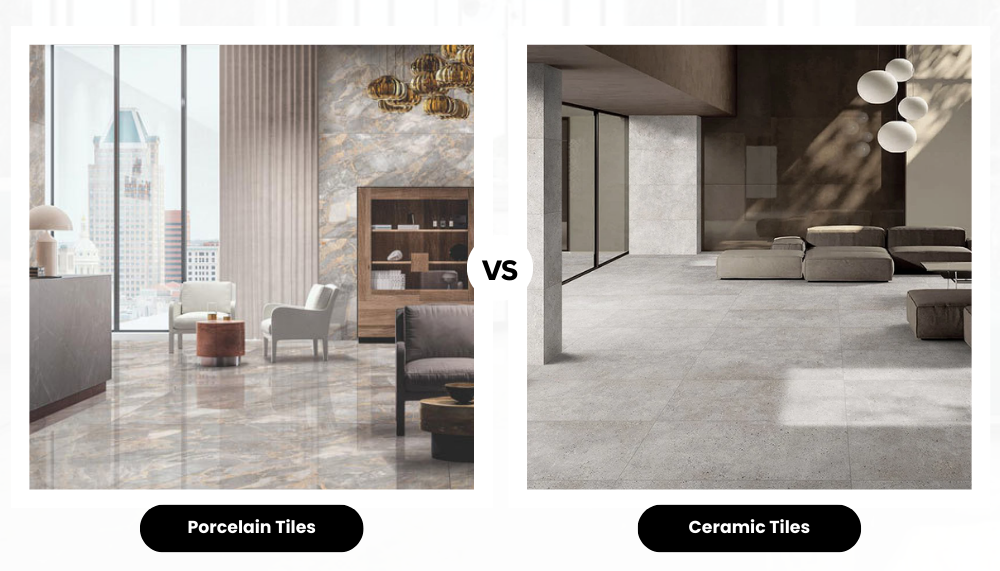
Durability: How Each Material Holds Up in the Kitchen
Porcelain is harder than ceramic. On the Mohs hardness scale, most porcelain tiles rate between 6 and 7. Most ceramic tiles fall in the 4 to 6 range. In kitchen floor terms, porcelain resists scratching from dropped utensils and heavy foot traffic better than ceramic does.
Through-body porcelain takes durability a step further. The color pattern runs through the full tile thickness. If the surface chips, the color underneath matches. This matters in high-use kitchens where corners and edges are vulnerable.
Ceramic tile with a glazed surface is durable for most kitchen applications. The glaze protects against stains and moisture. But if the glaze chips, you see the raw clay underneath, which may not match the surface color.
Visit our tile inspiration gallery to see both porcelain vs. ceramic options in finished kitchen installations.
Moisture Resistance: Critical for WNC Mountain Homes
Moisture resistance is where the porcelain vs. ceramic kitchen floor gap becomes most important for Western North Carolina homeowners. WNC homes sit on crawl space foundations in most cases. Humidity travels up through those foundations, especially during seasonal transitions.
Porcelain’s near-zero absorption rate handles that moisture migration without issue. The tile doesn’t absorb groundwater vapor. It doesn’t shift, swell, or crack from moisture cycling.
Ceramic’s higher porosity means it can absorb moisture over time. In a well-ventilated kitchen on a concrete slab, that’s rarely a problem. In a WNC home on a crawl space foundation with seasonal humidity variation, proper vapor barriers and subfloor preparation are even more important with porcelain vs. ceramic.
Our installation team always checks subfloor conditions before any tile project. Learn more at our tile installation page.
Cost: What to Expect for Each Material
Ceramic tile generally costs less per square foot than porcelain tile. The clay is less refined, the firing process is shorter, and the tile cuts more easily, which reduces installation labor time.
Porcelain tile costs more per square foot for the material itself. It’s also heavier and harder to cut, which can add labor cost. However, porcelain’s longer lifespan means the overall cost-per-year of ownership often comes out roughly equal or in porcelain’s favor.
For exact pricing on both options for your kitchen, contact our team at our contact page.
Aesthetics and Style Options
Both materials come in an enormous range of colors, patterns, and sizes. Modern printing technology means both porcelain and ceramic can realistically replicate wood, stone, concrete, and any number of natural materials.
Wood-look tile, for example, is almost always porcelain because the plank format and durability requirements suit porcelain’s properties. Large-format tiles in the 24×24 and 12×24 range are typically porcelain too, because the structural demands of that size need the denser material.
Ceramic shines in decorative wall tile and smaller-format floor tiles. For kitchen floors where a bold patterned tile look is the goal, ceramic can deliver distinctive designs. For a full look at kitchen tile styles available in WNC, visit our kitchen tile styles guide.
Slip Resistance: Both Options Can Be Safe
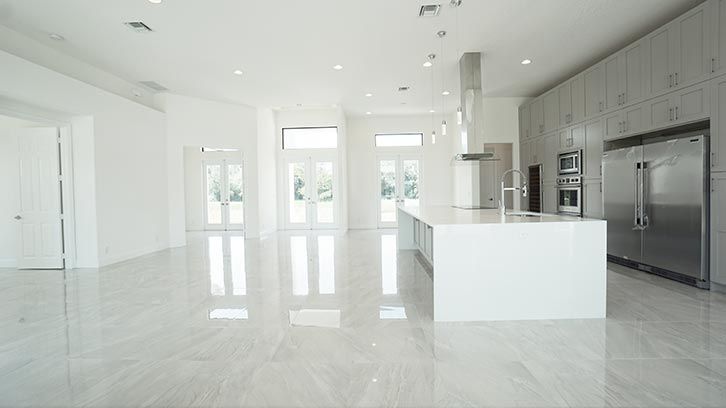
Slip resistance depends on the tile’s surface finish, not the base material. Matte and textured finishes in both porcelain and ceramic score higher for COF than polished finishes.
In the porcelain vs. ceramic kitchen floor comparison, neither material has an inherent safety advantage. What matters is the specific finish. For kitchen floors, matte or satin finishes are safer than glossy polished tiles, regardless of whether the tile is porcelain or ceramic.
Our slip-resistant kitchen tile guide explains exactly what to look for when evaluating safety ratings.
Installation: What to Know for Both
Ceramic tile installs more easily than porcelain in most cases. It cuts with standard tile saws, weighs less, and costs less in labor time.
Porcelain requires diamond-blade tile saws and more cutting precision. It’s heavier to handle. Our professional installation team is fully equipped for porcelain projects and handles kitchen floors in all sizes. For details on how tile size affects installation requirements, read our kitchen floor tile size guide.
Which Is Better for Your WNC Kitchen?
For most WNC kitchens, porcelain is the better long-term choice. The moisture resistance advantage alone justifies the higher upfront cost for homes on crawl space foundations. If you have a high-traffic kitchen with kids, pets, or regular cooking, through-body porcelain at PEI 4 or higher is the right call.
Ceramic tile is a good fit for lower-traffic kitchens or homeowners who want a specific design look that’s only available in porcelain vs. ceramic. Properly installed and maintained, ceramic tile holds up well for years.
Return to our most popular tile for kitchen floors guide for a full overview of kitchen tile options.
Summary
The porcelain vs. ceramic kitchen floor decision comes down to use, budget, and the specific conditions of your home. Porcelain wins on durability and moisture resistance, making it the smarter pick for most WNC mountain homes with crawl space foundations and active kitchen use. Ceramic offers a lower entry cost and excellent design variety for lighter-use spaces. Leicester Flooring’s non-commission team can walk you through both options at either WNC showroom.
Frequently Asked Questions
Porcelain vs. ceramic, which is harder?
Yes. Porcelain is fired at higher temperatures from denser clay, making it harder and less porous than ceramic. It resists scratching and moisture better, which matters for busy kitchen floors.
Can ceramic tile work in a kitchen with a crawl space foundation?
It can, but it requires careful subfloor preparation and proper moisture barriers. Porcelain is a safer choice for WNC homes on crawl space foundations because its near-zero absorption rate handles humidity migration better.
Does porcelain tile cost more to install than ceramic?
Generally yes. Porcelain is heavier and harder to cut, which adds some installation labor cost. The total project cost depends on square footage, subfloor condition, and the specific tile selected. Contact us for a project estimate.
Porcelain vs. ceramic: Which has more style options?
Both materials offer extensive style options. Porcelain dominates in large-format, wood-look, and stone-look styles. Ceramics often offer more variety in decorative surface patterns. See our kitchen tile styles guide.
Is porcelain tile slippery in the kitchen?
Polished porcelain can be slippery when wet. Matte-finish porcelain is not. Always choose a matte or textured finish for kitchen floors. See our slip-resistant kitchen tile guide for COF rating guidance.
Ready to Choose Between Porcelain vs. Ceramic?
Leicester Flooring carries American-made porcelain vs. ceramic tile at both our Asheville and Hendersonville showrooms. Our non-commission sales team will help you compare options based on your specific kitchen, budget, and WNC home conditions. Schedule a free in-home measure or visit us in person.