
Porcelain Tile Flooring: Benefits, Uses & What to Know
Porcelain tile sits at the top of the durability chart for hard surface floors. It handles moisture, heavy use, and temperature swings better than most options on the market. If you’re considering porcelain tile flooring for your home in Asheville, Hendersonville, or anywhere in Western North Carolina, this guide covers everything you need to make a confident decision.
We’ll walk through what porcelain flooring actually is, why it outperforms other tile types, where it works best in your home, and what to expect from installation and maintenance.
What Is Porcelain Tile Flooring?
Porcelain flooring is a type of ceramic tile made from a denser clay body fired at higher temperatures. The key ingredient is feldspar, added to the clay mixture before firing. When heated, feldspar vitrifies into a glasslike material. That process makes porcelain far denser and harder than standard ceramic tile.
The Tile Council of North America defines porcelain tile as any tile with a water absorption rate of 0.5% or less. Standard ceramic can absorb up to 3% moisture. That gap matters a great deal in wet rooms and in climates like WNC’s, where seasonal humidity and crawl space moisture are real concerns.
Porcelain tile flooring comes in two main forms. Glazed porcelain has a surface coating fired onto the tile body, which creates the color, pattern, and texture you see. Through-body porcelain has the same dense composition all the way through the tile. Both forms of porcelain flooring are excellent choices, and the right one depends on your specific room and usage.
You can see how porcelain tile flooring stacks up against ceramic and natural stone in our full tile flooring types.
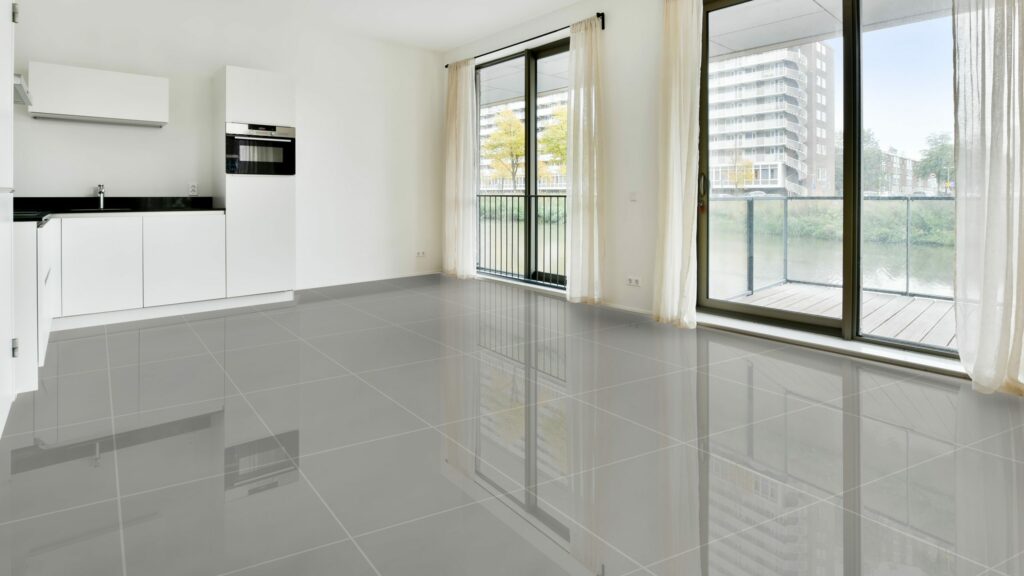
Porcelain Floor Tile Benefits: Why So Many Homeowners Choose It
There are several reasons porcelain tile consistently ranks as a top choice for kitchens, bathrooms, and high-traffic areas. Here’s what sets it apart from other options.
Outstanding Moisture Resistance
The biggest porcelain floor tile benefit is its near-zero water absorption. A rate of 0.5% or below means porcelain tile resists standing water, steam, humidity, and spills without drawing moisture into the tile body. For WNC homes dealing with mountain humidity, that’s a structural advantage that wood-based floors simply can’t match.
Exceptional Hardness and Durability
Porcelain tile flooring rates higher on the Mohs hardness scale than ceramic. It resists scratches, chips, and surface wear under daily use. In busy households with kids or pets, porcelain floor tile benefits include standing up to impact and abrasion that would damage softer floors.
According to the Porcelain Enamel Institute (PEI), porcelain tiles rated PEI 3 and above are suitable for residential flooring. PEI 4 and 5 work for heavy residential or light commercial traffic. Our team can help you identify the right PEI rating for your specific room and how you use it.
Frost Resistance for Outdoor Use
Frost-rated tile flooring is one of the few tile types safe for outdoor installation in mountain climates. Because it absorbs so little moisture, it doesn’t expand and crack during freeze-thaw cycles. Covered porches, sunrooms, and outdoor patios throughout WNC are excellent candidates for tile flooring.
Low Maintenance
Porcelain flooring requires minimal upkeep compared to natural stone. It doesn’t need regular sealing, and its dense surface resists staining without special treatments. A daily sweep and a weekly mop with a pH-neutral cleaner is all it takes. That’s one of the most practical porcelain floor tile benefits for busy households.
Design Versatility
Modern porcelain tile comes in an enormous range of styles. Wood-look plank porcelain, large-format stone-look tiles, and subtle concrete patterns are all widely available. Advanced printing technology means porcelain tile flooring can realistically mimic hardwood, marble, or slate without the maintenance demands of those materials.
Best Rooms for Porcelain Tile Flooring in WNC Homes
Porcelain tile works in almost any room of the house. But certain spaces get the most out of their strengths.
Kitchens
The kitchen is one of the strongest cases for porcelain flooring. Spills, splashes, dropped cookware, and heavy foot traffic are daily realities. Porcelain’s water resistance and scratch resistance handle all of it without complaint. Large-format porcelain tiles are particularly popular in kitchens because fewer grout lines mean a cleaner look and easier mopping.
Bathrooms
Porcelain flooring is the standard choice for bathrooms, and for good reason. Steam, standing water, and daily humidity are no match for a tile with a water absorption rate under 0.5%. Both floor and wall applications are common with porcelain. For shower floors, smaller tiles or textured finishes provide better traction underfoot.
Entryways and Mudrooms
In WNC mountain homes, entryways and mudrooms take constant abuse from wet boots, tracked mud, and outdoor gear. Porcelain tile handles all of it without warping or staining. Its hard surface is far easier to clean than carpet or wood in this zone, and it holds up to the grit and moisture that mountain living brings in daily.
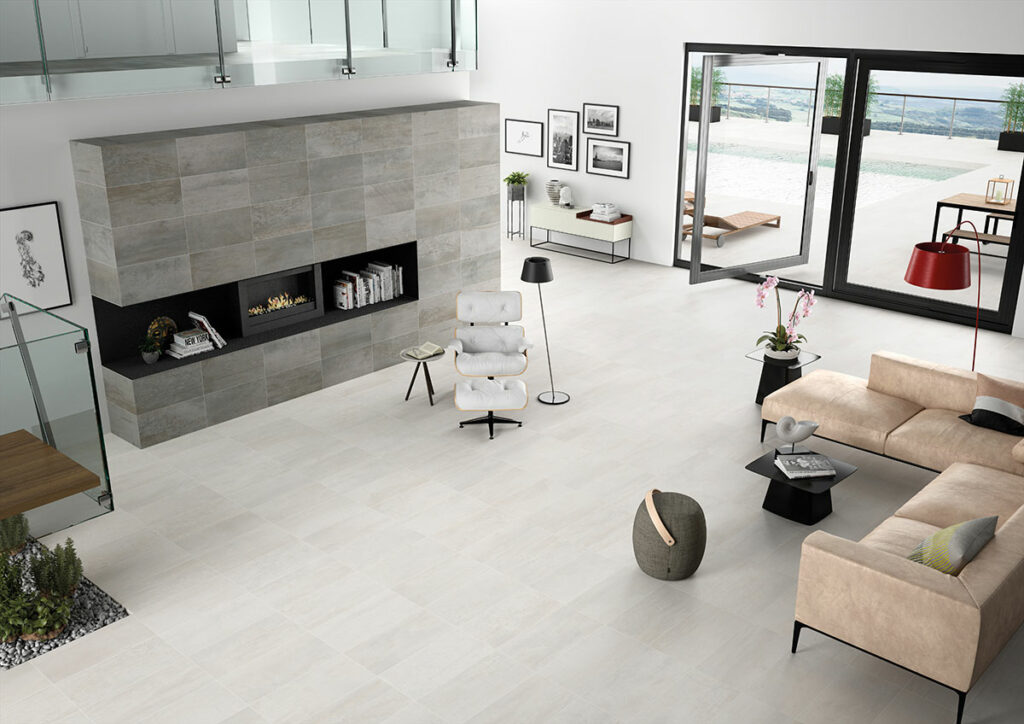
Glazed vs. Through-Body Porcelain Tile Flooring
Choosing between glazed and through-body tile flooring comes down to where you’re installing and how you want the floor to wear over time.
Glazed porcelain tile flooring has a surface coating that provides its color and pattern. It offers the widest design range available, from wood grain to polished marble looks. If the glaze chips, it can reveal a different-colored core underneath. That’s rare with quality tile, but worth knowing before you choose.
Through-body porcelain tile flooring has the same dense composition all the way through the tile. A chip or scratch blends with the body color because the material is uniform. For floors that see very heavy use or outdoor applications, through-body porcelain is often the preferred choice.
For most residential rooms, glazed tile flooring is an excellent choice that delivers great looks and strong durability. Our team at our Asheville showroom and our Hendersonville location can show you both options side by side.
Porcelain Tile Flooring vs. Ceramic: What’s the Difference?
Many homeowners arrive at our showroom unsure whether they need porcelain flooring or regular ceramic. The two look similar on the shelf but perform differently in your home.
Ceramic tile is made from a less dense clay body fired at lower temperatures. It’s softer, easier to cut, and generally less expensive than porcelain tile flooring. Ceramic works well in lower-traffic areas like dining rooms, laundry rooms, and powder bathrooms. It’s a solid choice when budget is the top concern and the room isn’t dealing with heavy moisture.
Porcelain tile is harder, denser, and more moisture-resistant. For any room that handles water regularly, including full bathrooms, kitchens, and mudrooms, porcelain is the stronger investment. The higher upfront cost is offset by longer lifespan and lower maintenance needs.
If you’re still weighing your options, our tile flooring overview page lays out all the choices we carry.
Porcelain Tile Flooring Installation: What to Expect
Installing porcelain flooring is more demanding than installing ceramic. Porcelain’s hardness requires diamond-blade saws for cutting. Its weight and density demand careful subfloor preparation.
Homes with crawl space foundations, common across Western North Carolina, need moisture management before porcelain flooring goes down. Where the subfloor is wood, concrete backer board is required before tile can be set; without it, subfloor flex will crack grout lines and loosen tiles over time.
Mortar selection also matters with porcelain flooring. Standard-bond mortars may not achieve full coverage on the back of dense porcelain tiles. Large-format porcelain requires a modified thin-set mortar with stronger adhesion. Our installers use the correct materials for every job.
After installation, porcelain tile flooring needs a minimum 48-hour cure time before foot traffic. Rushing that window risks dislodging tiles before the mortar fully sets.
See the full process on our tile and stone installation page. We offer a free in-home measure before every project, so there are no surprises on installation day.
Caring for Porcelain Tile Flooring
Porcelain tile flooring is one of the easiest floors to maintain long-term. Daily sweeping or vacuuming removes grit that could scratch the surface glaze over time. A weekly wet mop with a pH-neutral cleaner keeps the surface looking sharp.
Avoid acidic or abrasive cleaners. Vinegar, bleach, and ammonia-based products can dull the surface over time and damage grout lines. Stick with manufacturer-approved products, or ask our team at either showroom for a recommendation.
Unlike natural stone, porcelain tile does not require sealing. The dense tile body resists moisture and stains on its own. Grout is a different story. Sealing grout after installation protects it from staining and makes routine cleaning far easier.
Full maintenance guidance is available on our tile care and maintenance page.
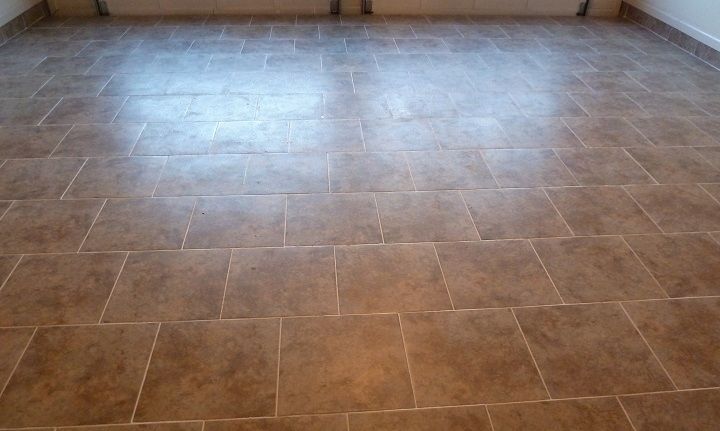
How Porcelain Tile Flooring Compares to Other Options
| Floor Type | Water Resistance | Durability | Maintenance | Best For |
| Porcelain Tile | Excellent | Very High | Low | Kitchens, baths, and outdoor |
| Ceramic Tile | Good (glazed) | Moderate | Low | Light-traffic areas |
| Natural Stone | Varies | High | Moderate-High | Formal rooms |
| Hardwood | Poor | Moderate | Moderate | Living rooms, bedrooms |
| Luxury Vinyl | Very Good | Moderate | Low | Budget-friendly wet areas |
If you’re deciding between porcelain tile flooring and hardwood flooring, the main trade-off is warmth and feel versus durability and moisture resistance. Hardwood brings character and comfort underfoot. Porcelain flooring wins on longevity and water protection, especially in WNC’s humid climate.
Looking at luxury vinyl plank instead? Vinyl is warmer underfoot and easier to install. Tile flooring outlasts it in high-traffic situations and has a longer lifespan when properly maintained.
Frequently Asked Questions
Is porcelain tile flooring cold underfoot?
Tile flooring stays cooler than carpet or wood. In living spaces, area rugs help add warmth. Porcelain is also fully compatible with radiant floor heating systems, which solve the cold floor problem entirely. Our team can discuss radiant heat options when you schedule your free in-home measure.
How long does porcelain flooring last?
With proper installation and routine cleaning, tile flooring can last 50 years or more. The tile itself is extremely resistant to wear. Grout requires more attention over time and may need re-sealing or repair. Professional installation gives porcelain tile flooring the best foundation for a long lifespan.
How do I get started with porcelain flooring at Leicester Flooring?
The easiest first step is scheduling a free in-home measure. We send a professional to measure your space, check the subfloor, and give you accurate project details. You can also visit either showroom to browse our full selection of porcelain tile flooring styles.
Summary: Is Porcelain Tile Right for Your Home?
Porcelain tile flooring delivers the best combination of durability, moisture resistance, and low maintenance among hard surface floors. For WNC homes in Asheville, Hendersonville, Black Mountain, Weaverville, and the surrounding mountain communities, tile flooring is a natural fit. It handles the humidity, temperature swings, and everyday demands of mountain living without fuss. Whether you’re renovating a kitchen, updating a bathroom, or finishing a mudroom, porcelain flooring is worth serious consideration.
Ready to Install Porcelain Flooring in Your Home?
Our showrooms in Asheville and Hendersonville carry a wide selection of porcelain tile flooring from American brands we trust, including Shaw, Mannington, and Emser Tile. Our non-commission staff will walk you through every option without pressure and help you find the right fit for your space.
Every installation comes backed by our lifetime installation warranty. Contact us to talk through your project, or check our financing options if you want to spread the investment. You can also read our customer reviews to see what WNC homeowners say about working with us.
Not ready to commit to tile? Browse our other flooring categories: carpet, laminate, and hardwood installation.