
Best Kitchen Flooring for Asheville Craftsman Bungalow
Walk into an Asheville craftsman bungalow kitchen, and you feel it immediately. The thick painted trim, the original cabinet hardware, the plaster walls in warm cream or olive tones. These homes were designed with intention — every material chosen to feel grounded, natural, and handmade. Getting the kitchen flooring right in a house like this matters more than in almost any other home style, because the wrong choice announces itself loudly.
We’ve installed floors in craftsman bungalows across Montford, West Asheville, North Asheville, and Kenilworth for over 50 years. The question we hear most often is some version of: “I want something that looks like it belongs here.” That’s a good question to start with, and it shapes every recommendation that follows.
The best kitchen flooring for Asheville craftsman bungalows has to do two jobs at once. It has to look honest, warm-toned, textured, and in conversation with the natural materials these homes were built around. And it has to hold up in a kitchen environment in WNC, where humidity swings seasonally, and older homes don’t always have the moisture barriers of newer construction. Here’s how to think through each option.
Why Kitchen Flooring in a Craftsman Home Is Different
Craftsman bungalows weren’t designed around the kitchen the way modern homes are. The kitchen was a separate, functional room — not an open showpiece. That changes how kitchen flooring for Asheville craftsman homes should be approached.
The kitchen in a 1920s bungalow is typically small by today’s standards: 100 to 150 square feet, sometimes less. It connects to a dining room that likely still has original fir or oak floors. Whatever you install in the kitchen needs to either match or thoughtfully complement what’s next to it. A floating gray LVP that looks sharp in a modern open-concept layout can look jarring flanked by century-old wood and original built-ins.
Color palette is everything here. Craftsman interiors lean on warm, earthy tones — honey oak, amber, walnut, olive, terracotta. Cool undertones and stark white finishes generally look out of place. Choosing the right color for your floors covers this well if you’re working through the decision on a craftsman interior.
Texture matters too. Flat, glossy surfaces don’t belong in a 1920s kitchen. Matte finishes, wire-brushed wood, hand-scraped grain, and unglazed ceramic all read as more architecturally honest.
Engineered Hardwood: The Most Historically Accurate Choice
For craftsman bungalows kitchens in Asheville, engineered hardwood in white oak, red oak, or hickory is as close to period-appropriate as you can get while still addressing the practical realities of WNC’s mountain climate.
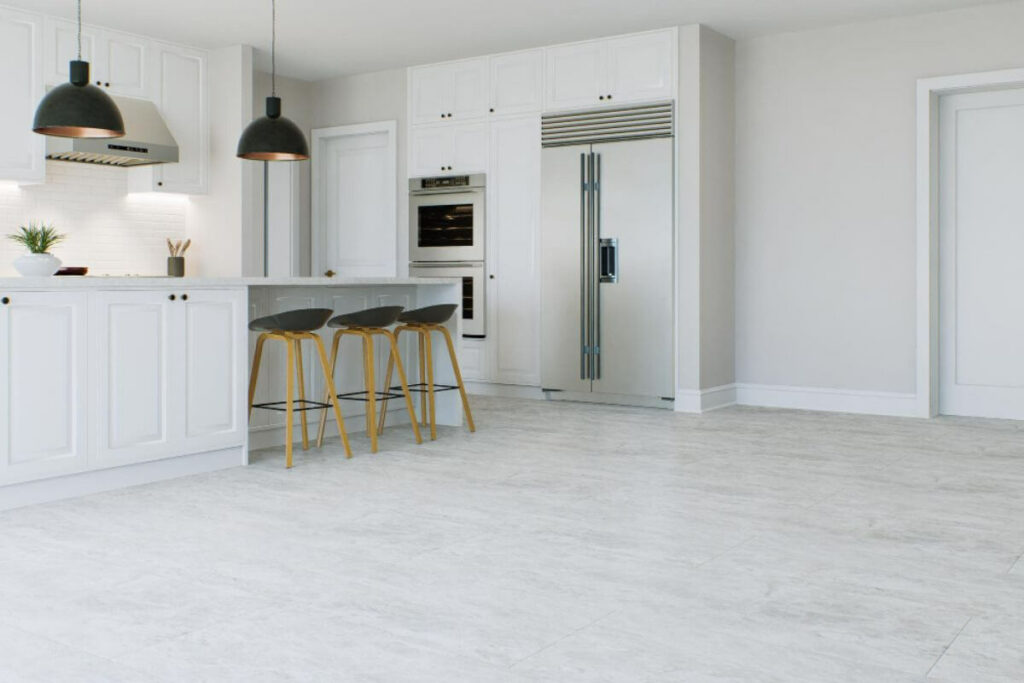
Original craftsman homes used solid fir or oak throughout — including, in many cases, the kitchen. Engineered hardwood preserves that authentic visual character: real wood on the surface, with a multi-ply core underneath that handles Asheville’s humidity swings far better than solid wood can. The solid vs. engineered hardwood comparison explains the structural difference in detail, but for a craftsman kitchen, the short version is this: engineered hardwood gives you the look and feel of the real thing with meaningfully less risk of gapping or cupping when indoor humidity shifts from summer to winter.
What Species and Finish to Choose
White oak is probably the strongest choice for kitchen flooring in Asheville craftsman bungalows right now. It’s one of the most historically common species in WNC millwork and floors, and its grain pattern has enough character to complement the visual complexity of a craftsman interior without fighting it. A medium-brown stain — honey, amber, or a warm walnut — works better than the very pale whitewash finishes popular in contemporary kitchens.
Wire-brushed or lightly distressed surface textures add depth and hide minor scratches better than smooth finishes. In a kitchen that’s going to see daily use, that matters. Matte or satin sheens are more appropriate than high-gloss for the craftsman aesthetic.
Plank width should be in the 3-to-5-inch range. Original craftsman bungalows’ floors were typically narrow strip flooring, so going narrower honors that tradition. Very wide planks (7 inches or more) read as contemporary farmhouse and can look incongruous in a small, original-layout kitchen.
One Practical Caveat
Engineered hardwood in a kitchen requires consistent climate control and careful moisture management. Asheville’s seasonal temperature and humidity changes mean any wood-based flooring will move. Wiping up spills promptly, keeping a consistent indoor humidity level (40–50% is ideal), and making sure the subfloor has a proper moisture barrier are non-negotiable with this choice.
Period Tile: The Other Architecturally Honest Option
Original craftsman homes, particularly those built from 1910 through the 1930s, frequently used ceramic tile in kitchens. The tile aesthetic of the Arts and Crafts movement was specific: small format, matte or low-gloss glaze, geometric patterns, and warm natural colors.
Kitchen flooring for Asheville craftsman bungalows that go the tile route should take cues from that original vocabulary. Here’s what that looks like in practice:
A hex tile in white, cream, or black-and-white patterns is the most recognizable craftsman kitchen floor. Two-inch and three-inch hex mosaics were common in the 1910s and 1920s and are still manufactured today in faithful reproductions. This format is period-appropriate, easy to clean, and completely waterproof — which makes it genuinely practical for a kitchen.
4×4 or 6×6 ceramic square tile in matte white, ivory, or soft sage reads as a craftsman bungalow when installed in a simple grid pattern. It’s understated in a way that suits the bungalow kitchen’s functional, no-frills character.
Encaustic or cement-look tile with geometric patterns is a slightly more expressive option that still fits within the Arts and Crafts design language. These work well in kitchens where the cabinetry and walls are neutral enough to let the floor carry some visual weight.
Tile is fully waterproof, easy to clean, and essentially permanent if installed well. The trade-offs are that it’s cold underfoot — a consideration in mountain WNC winters — and grout lines require periodic maintenance. If cold tile in winter sounds like a deal-breaker, a radiant heat mat system can address that without adding significant project complexity. Our tile installation team can walk you through both the tile selection and the radiant heat question.
Luxury Vinyl Plank: When Practical Wins
There are craftsman kitchens where neither engineered hardwood nor tile is the right call. Maybe the subfloor is in rough shape from a previous renovation. Maybe the budget is a real constraint. Maybe the homeowner has young kids and two dogs and wants kitchen flooring for their Asheville craftsman bungalows that can take real punishment without refinishing or regrouting.
For those situations, a high-quality luxury vinyl plank in the right finish and color can work in a craftsman bungalow’s kitchen — and work well.
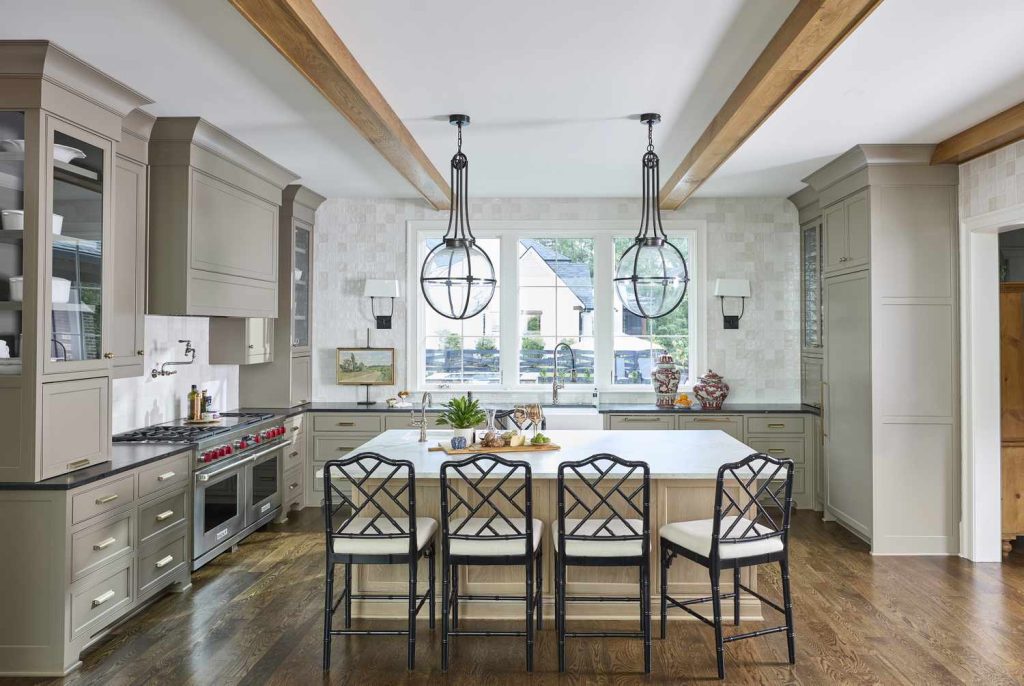
The keyword is high-quality. Thin, shiny LVP with an obvious plastic look will fight with every original feature in a 1920s bungalow. What you want is LVP with a thick wear layer (12 mil or more), a realistic wood grain texture with visible depth and variation, and a matte or low-sheen finish in a warm, brown-based color. Wire-brushed and hand-scraped textures are available in LVP now, and those surface treatments help it read as more authentic in a craftsman setting.
LVP’s advantages in an older Asheville home are real. It’s 100% waterproof, handles the humidity swings of WNC’s mountain climate without expanding or contracting, and can float over an imperfect subfloor without extensive prep work. It’s also the most comfortable underfoot of the three main options here.
Our vinyl flooring products include options in the warm, textured styles that suit craftsman interiors. Bring photos of your kitchen — the cabinets, trim color, and any adjacent wood floors — when you come in, so we can pull samples that coordinate correctly.
What’s Already Under Your Kitchen Floor?
Before committing to any kitchen flooring for an Asheville craftsman bungalow, it’s worth finding out what’s there now. Many of these homes have original hardwood underneath vinyl, linoleum, or layers of previous renovation. If that original wood is structurally sound, refinishing it may be more appropriate than installing something new — and it keeps more of the home’s authentic character intact.
We’ve uncovered original fir floors in Montford kitchens that were in genuinely good condition under three layers of old vinyl. When that happens, refinishing is usually the better call than replacement. Hardwood floor refinishing gives those floors another generation of life and preserves what makes these homes worth caring for.
A free in-home measure is a good opportunity to have someone look at the actual floor conditions in your kitchen — subfloor state, what’s underneath, how the space connects to adjacent rooms — before you make a material decision.
Pairing Kitchen Flooring with Craftsman Cabinets and Millwork
Craftsman bungalows’ kitchens typically have one of three cabinet situations: original painted wood cabinets (often white, cream, or sage), original or reproduction stained wood cabinets in oak or fir, or a later renovation with period-style cabinetry in shaker or craftsman-influenced profiles.
With painted white or cream cabinets, Warm wood tones in the floor create a classic, grounded look. Honey oak or walnut-tone engineered hardwood, warm ivory hex tile, or wood-tone LVP all work. Avoid stark cool grays on the floor — they clash with the warm wall and trim colors typical of these kitchens.
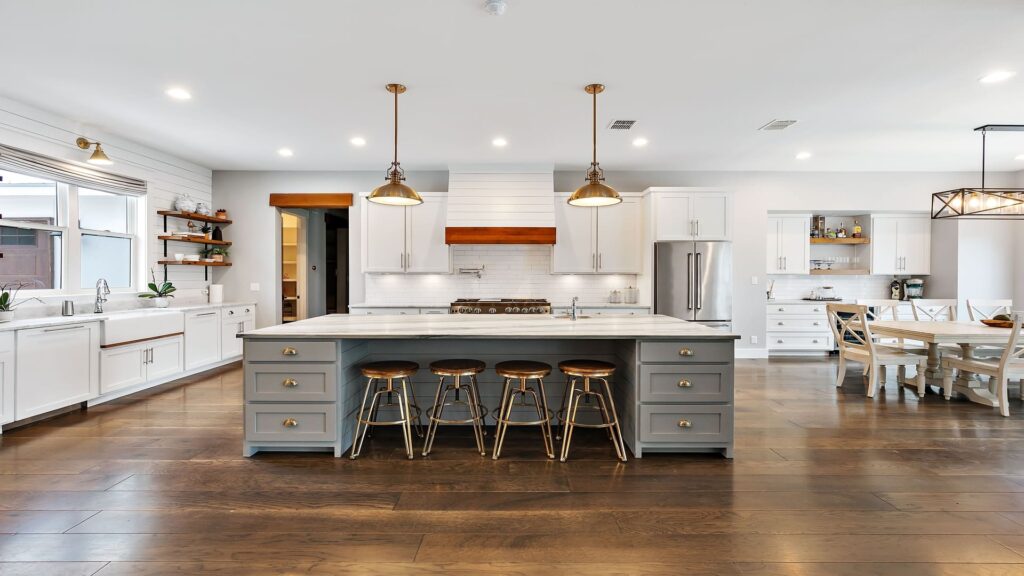
With stained wood cabinets, the floor needs to either match the wood tone closely or contrast clearly. Mid-tone flooring that’s close but not quite the same as the cabinet wood will look like a mistake. Go darker on the floor than the cabinets, or shift to tile or LVP to avoid the matching problem entirely.
With shaker-style renovated cabinets, you have more flexibility. This is where a handsome medium-brown LVP or a simple white hex tile can work without looking anachronistic.
Our blog on pairing kitchen flooring with cabinets has more depth on this specific coordination question.
Frequently Asked Questions
Is hardwood really practical in an Asheville craftsman kitchen?
Engineered hardwood is more practical than solid hardwood in WNC kitchens because it handles our humidity variation better. Either way, spills need to be wiped up promptly, and indoor humidity should be kept reasonably stable. In kitchens with good climate control and attentive homeowners, wood floors hold up well for decades.
How do I know if my original hardwood floor can be refinished?
The floor needs at least 3/16 inch of solid wood above the tongue-and-groove for refinishing. A flooring professional can check this during an in-home visit. If there’s enough material and no structural damage, refinishing is almost always worth considering before replacing.
What tile size is most appropriate for a craftsman kitchen?
Two-inch hex mosaic, 3×3 ceramic, and 4×4 ceramic formats are the most historically appropriate. Larger tiles (12×12 and up) are harder to scale correctly in a small craftsman bungalow kitchen and tend to read as contemporary rather than period-appropriate.
Can I use the same flooring in my Craftsman kitchen and dining room?
Running the same material through both spaces works well if the dining room doesn’t have original hardwood. If it does, matching or complementing the existing floor is usually the better approach — starting a new material at the kitchen threshold and keeping the original floor in the dining room is a common and sensible solution.
How does WNC’s humidity affect kitchen flooring specifically?
Asheville’s humidity swings between roughly 70–80% in summer and 30–40% in winter when homes are heated. Wood-based floors expand in high humidity and contract when humidity drops, which can cause visible gapping in winter. Proper accclimation before installation and a moisture barrier in the subfloor reduce this significantly. Moisture-resistant flooring options cover this in more detail.
The right kitchen flooring for an Asheville craftsman bungalow is out there — it just takes a little more thought than picking what looks good in a showroom photo. These homes have character worth honoring, and the floor you choose either adds to that or subtracts from it.
We’d be glad to help you work through it. Visit our Asheville showroom, bring photos of your kitchen, and we’ll pull samples that actually make sense for the house you have. Or schedule a free in-home measure and let us see the space directly. Either way, you’ll leave with a clearer picture of what belongs in your kitchen.