
Kitchen Flooring Installation Cost in Asheville: What to Budget in 2026
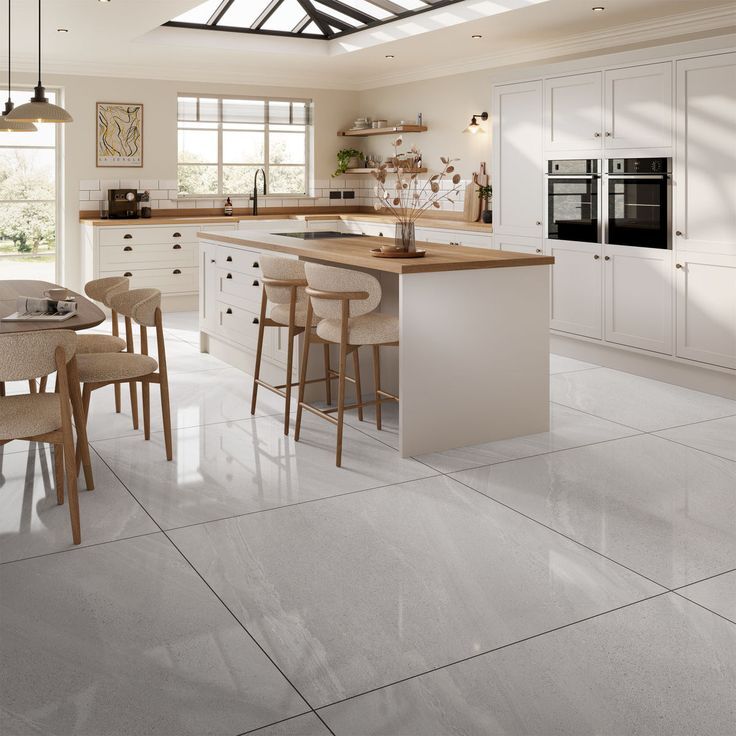
One of the first questions Asheville and Hendersonville homeowners ask when they start planning a kitchen flooring project is a simple one: what’s this going to cost? The honest answer is that kitchen flooring installation costs vary widely between projects, so any figure you find online might be significantly different from what your project requires.
This guide explains exactly what drives kitchen flooring installation cost in the Asheville area, what variables increase or decrease the total, and how to get a realistic estimate for your specific kitchen. We don’t publish standard prices because a 120-square-foot kitchen with a flat subfloor and LVP is very different from a 280-square-foot kitchen with tile work and a damaged subfloor that needs repair.
What You’re Actually Paying For
When you get a quote for kitchen flooring installation, the total reflects several distinct cost components. Understanding what each one is helps you evaluate quotes accurately and ask better questions.
Material cost is the most visible line item. This is the price per square foot of the flooring product itself, multiplied by the square footage of your kitchen plus standard overage (usually 10 to 15% to account for cuts and waste). Material costs vary widely depending on the product selected. Entry-level laminate and mid-range LVP are at the lower end. Wide-plank engineered hardwood and premium large-format porcelain tile are at the higher end.
Installation labor covers the work of the installation crew — removing the existing floor if applicable, prepping the subfloor, laying the new material, installing transitions, and reinstalling baseboards. Kitchen labor rates are typically higher per square foot than in other rooms because kitchens require more time per square foot due to appliance handling and more complex cutting around cabinets.
Appliance disconnection and reconnection are usually included in our kitchen flooring installation cost service. For gas appliances, a licensed plumber may be required, which is an additional cost that should be identified during your in-home measure.
How Kitchen Size Affects Cost
Kitchen square footage is the most straightforward cost driver for kitchen flooring installation cost. More square feet means more material and more labor time. But kitchen shapes affect cost, too.
A galley kitchen with long, straight runs is faster to install than an L-shaped or U-shaped kitchen with multiple corners and angles. An open kitchen that flows into a dining area requires careful attention to transitions and layout direction. Kitchens with islands require cuts around the island base. Each of these adds time and, therefore, cost.
When we do your free in-home measure, we don’t just calculate square footage — we assess the layout complexity and identify where the job requires more precise work. Schedule your free in-home measure to get an accurate picture of your specific kitchen.
How Material Choice Affects Kitchen Flooring Cost
The material you choose has a greater impact on the total cost of kitchen flooring installation than almost any other variable. Here’s a general framework for thinking about material cost tiers:
Luxury Vinyl Plank (LVP) represents a broad range from budget-accessible to premium. Entry-level LVP products are thin, have a shorter wear layer, and carry shorter warranties. Mid-range and premium LVP products — which are what most homeowners choose for kitchens — have thicker wear layers, better acoustic properties, and longer manufacturer warranties. For kitchens, we typically recommend products at the mid-range and above. See our LVP product options to understand what’s available.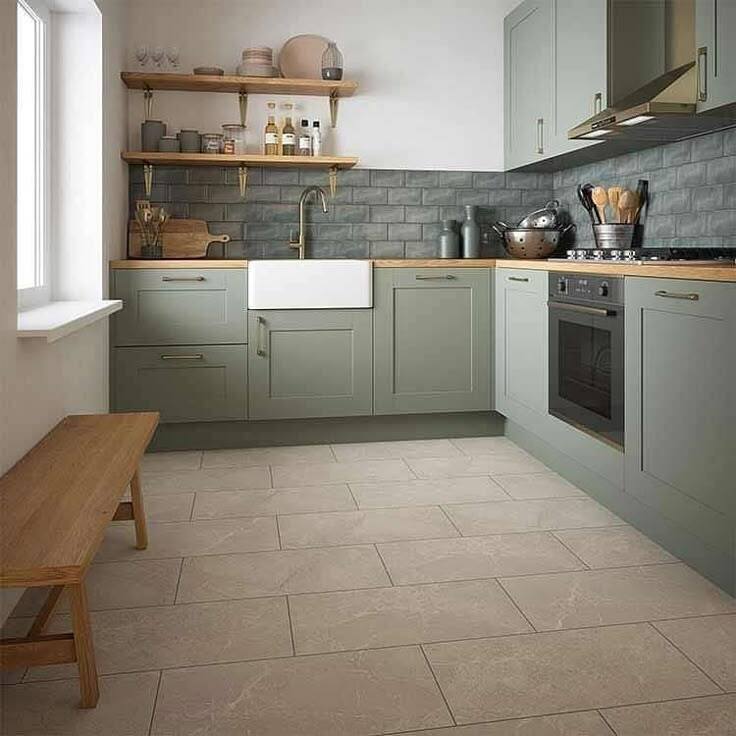
Laminate is generally competitive with entry- to mid-range LVP on material cost, though premium waterproof laminate products approach LVP pricing. Our laminate product catalog shows the brands and lines we carry. For kitchens specifically, we recommend waterproof-core laminate products over standard laminate, as the latter affects the material price point.
Hardwood and engineered hardwood are generally at the higher end of material cost. In kitchens, installation labor costs are also higher due to the additional care required for moisture management. If you’re comparing hardwood to other options, review our comparison guide covering hardwood, LVP, laminate, tile, and carpet to understand the full picture. For a deeper dive specifically on LVP versus hardwood, see hardwood vs. vinyl plank flooring.
How Subfloor Condition Affects Cost
This is the cost variable most homeowners don’t fully account for when budgeting for kitchen flooring installation. Subfloor condition can add meaningful cost to a project, and in older Asheville and Hendersonville homes, significant subfloor work is common.
Leveling compounds for minor variations are relatively inexpensive. Replacing a section of damaged subfloor sheathing is more involved. Addressing moisture-related issues affecting the structural subfloor is the most costly scenario. We identify these conditions during the in-home measure so you’re not surprised by them on installation day. Understanding subfloor preparation for laminate and hard surface flooring provides a comprehensive explanation of what this work entails.
Removing Existing Flooring
If your kitchen currently has old flooring that needs to come out before the new floor goes down, that’s typically an additional labor cost. The complexity depends on what’s there.
Peeling up old sheet vinyl is generally straightforward. Removing ceramic tile installed in thinset mortar is labor-intensive — the tile doesn’t come up easily, and the thinset often needs to be ground down afterward. Removing multiple layers of old flooring, stacked over decades, takes time. Old adhesives from vinyl tile products can complicate the installation of new floating floors.
When you schedule your in-home measure, we assess the existing floor as part of the process and include removal in the project scope if needed.
The Cost of Not Using a Professional
A DIY kitchen flooring installation cost looks appealing on the surface because you can skip the labor cost. But kitchens are one of the rooms where DIY errors are most costly to fix.
A poorly managed expansion gap causes a laminate floor to buckle — and fixing that means pulling the floor up and relaying it. An unlevel subfloor under tile causes grout joints to crack within months. A dishwasher reinstalled improperly causes a water leak that damages your new floor within a year. These aren’t hypothetical outcomes — they’re what we see when homeowners call us to fix kitchen flooring installation cost jobs that went wrong. The honest comparison of DIY vs. professional flooring installation walks through the real risks.
Leicester Flooring’s lifetime installation warranty means that if something goes wrong with our work, we come back and fix it. That’s coverage a DIY project doesn’t have.
Financing Your Kitchen Flooring Installation Cost
Kitchen flooring installation cost is a real investment, and not every homeowner wants to pay the full amount upfront. Leicester Flooring offers kitchen flooring financing options that allow you to spread the cost over time. This lets you choose the right material for your home without compromising on quality based on what you have available today.
Ask about financing options when you visit either of our showrooms, or bring it up when you call to schedule your in-home measure.
Getting an Accurate Estimate
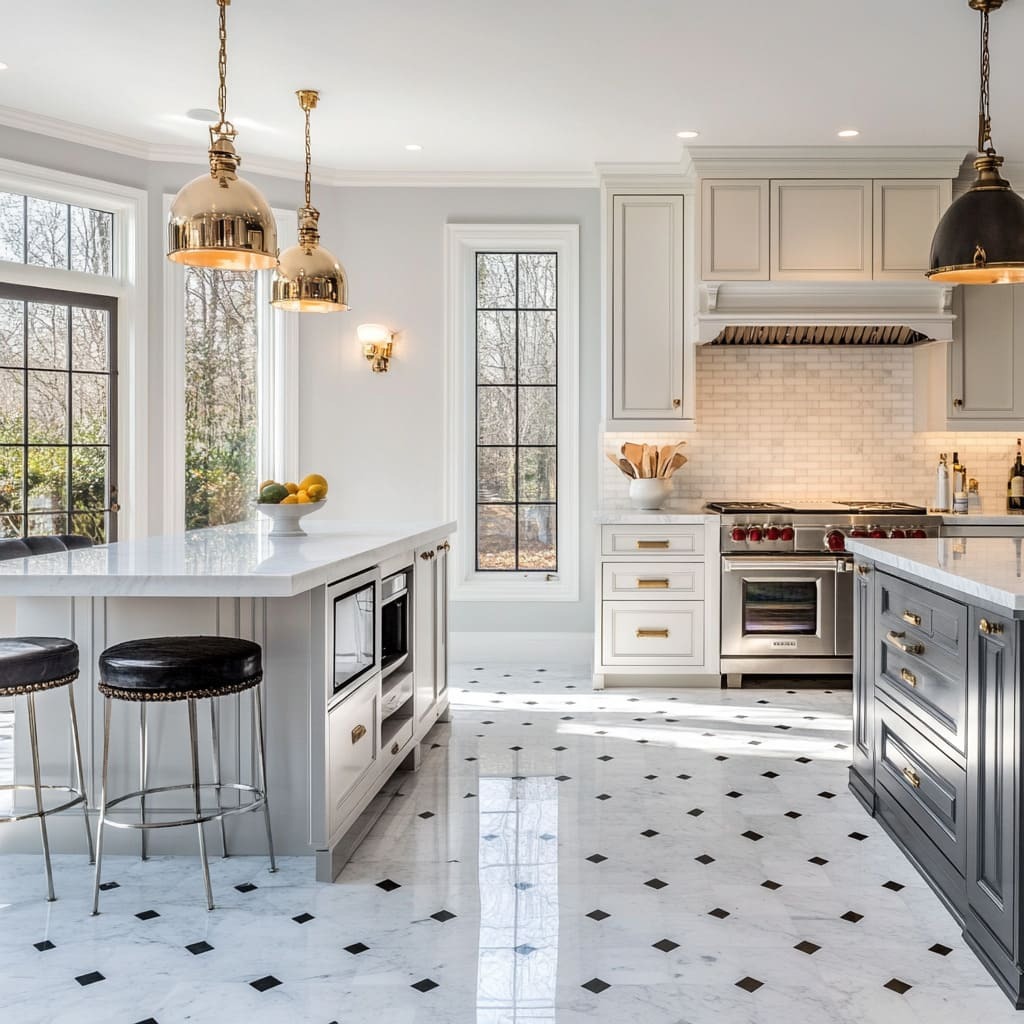
The most reliable way to understand the cost of kitchen flooring installation in Asheville and Hendersonville is to schedule a free in-home measure with Leicester Flooring. We visit your home, measure the space accurately, assess the subfloor, and identify any project-specific factors that affect cost. From that information, we provide an estimate that reflects your actual kitchen, not an average or a ballpark.
General pricing research is useful for context. The kitchen flooring cost comparison guide provides a framework for comparing material costs across product types. But for your specific project, the in-home measure is the right starting point.
Contact us to schedule your free in-home measure or visit either of our showrooms in Asheville or Hendersonville.
Summary
Kitchen flooring installation cost in Asheville is driven by square footage, material choice, subfloor condition, removal of existing flooring, and project complexity. Kitchens typically cost more per square foot than other rooms due to the need for more precise appliance installation and management. Leicester Flooring provides free in-home measures that give you an accurate, project-specific estimate — along with American-made flooring options, a lifetime installation warranty, and 50 years of experience serving Western North Carolina homeowners.
Frequently Asked Questions
Why is kitchen flooring installation cost more expensive than other rooms?
Kitchens require appliance management, more complex cuts around cabinets and islands, closer attention to moisture, and typically more subfloor preparation than bedrooms or living rooms. These factors add labor time, which is reflected in the cost.
How much does subfloor repair add to kitchen flooring installation cost?
It depends entirely on what’s needed. Minor leveling adds modest cost. Replacing damaged sections of subfloor sheathing adds more. We identify subfloor conditions during the in-home measure and include necessary prep work in the project scope.
Can I get a ballpark price without an in-home measure?
We’re not comfortable providing ballpark pricing because kitchens vary too much. A number we give you over the phone without seeing the space may be significantly different from the actual project cost, which isn’t helpful to you.