
Waterproof LVP Flooring: The Complete 2026 Buyer’s Guide for Asheville Homes
Last Updated: May 2026
 Key Takeaways
 Key Takeaways
- Waterproof LVP is the most installed hard surface flooring in Western North Carolina homes for kitchens, baths, basements, and pet-heavy households.
- The construction type (SPC, WPC, or rigid core) matters more than brand for matching the floor to your home.
- Wear layer thickness, not price, predicts how the floor will look in 10 years.
- True waterproof LVP protects the plank itself. The subfloor underneath still needs proper preparation.
Walk into our Asheville or Hendersonville showroom on any given week and waterproof LVP is the most-asked-about product on the floor. It has earned the spot. Modern luxury vinyl plank does almost everything homeowners want from hardwood without the moisture risk, and the visual gap with real wood gets smaller every year.
This guide is the home base for understanding waterproof LVP from a 50-year family installer in Western North Carolina. We cover construction types, wear layers, room-by-room recommendations, brand differences, and installation realities. If you have not yet committed to LVP over laminate, work back through our LVP vs laminate decision guide first to compare the two head-to-head.
What Makes LVP Genuinely Waterproof
LVP is built from PVC, which does not absorb water at any temperature or duration. The image layer, wear layer, and core all sit on a vinyl substrate that water rolls over instead of soaking into. Drop a piece of LVP in a bucket of water for a month, dry it off, and the plank is unchanged.
This is the defining feature of the category and the reason it has replaced laminate in kitchens, baths, and basements across most price points. The waterproof flooring technology hub covers the full science. The short answer: PVC and water are not friends.
That said, LVP being waterproof does not mean your floor is waterproof. Water can still seep through expansion gaps at walls, around toilets, and at transitions between rooms. The plank survives. The subfloor underneath may not. Proper installation closes those gaps, and that work matters as much as the product you pick.
The Three Main Waterproof LVP Constructions
Every waterproof LVP plank you see on a showroom floor falls into one of three construction categories. Each one solves a slightly different problem.
| Construction | What It Is | Best For |
|---|---|---|
| SPC (Stone Polymer Composite) | Rigid core with crushed limestone | Uneven subfloors, dent resistance |
| WPC (Wood Polymer Composite) | Rigid core with wood fiber | Comfort, warmth, sound damping |
| Rigid Core | Engineered hybrid, often SPC variants | Most modern installs, all-purpose |
| Flexible LVP | Thin glue-down or loose-lay vinyl | Budget projects, commercial |
We dig into the technical differences between SPC, WPC, and rigid core in our dedicated LVP construction comparison guide. The headline: SPC is the most popular today because it handles uneven subfloors and resists denting, while WPC trades a little durability for noticeably better feel underfoot.
Wear Layer Thickness: The Most Important Number on the Box
The wear layer is the clear protective layer on top of the printed wood image. Its thickness, measured in mils (thousandths of an inch), determines how long the floor will look new.
Wear Layer Tiers
- 6 to 8 mil: Light residential, closets and guest bedrooms only
- 12 mil: Standard residential, normal family rooms and bedrooms
- 20 mil: Heavy residential and light commercial, kitchens with pets, vacation rentals
- 28 mil: Commercial-grade, high-traffic Asheville short-term rentals and entries
For a typical Asheville family home, 12 mil is the entry point and 20 mil is the sweet spot. Vacation rentals, busy entries, and homes with multiple large dogs benefit from 28-mil products. Going thinner than 12 mil saves a small amount on materials and costs you years of finished appearance.
Room-by-Room Waterproof LVP Recommendations
Kitchens
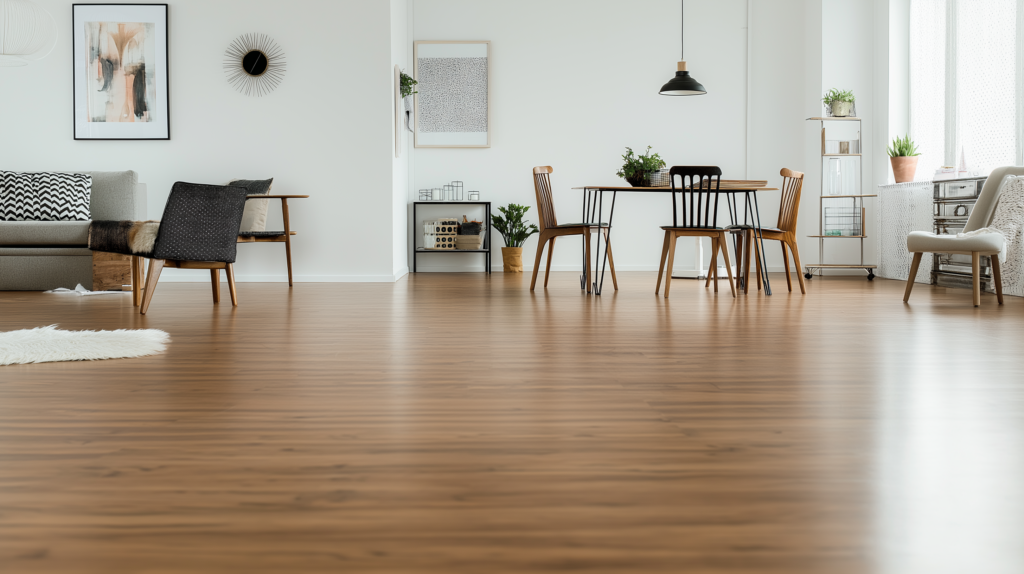
Kitchens are the highest-value room for waterproof LVP. Constant spills, dropped utensils, dishwasher leaks, and standing time at the counter all push toward LVP. Our kitchen flooring decision guide covers the full set of kitchen choices, but for most homes the question becomes which LVP, not whether LVP.
Pick 20-mil wear layer or above for kitchens. Pick a matte or low-sheen finish to hide grease splatter. Pick longer planks (48 inches or more) to keep transitions away from the work triangle.
Bathrooms
Full bathrooms with showers and tubs are the most demanding waterproof environment in any home. LVP handles them when laminate cannot. The bathroom flooring guide covers the differences between half baths, full baths, and primary suites.
Tight expansion joints and good caulking around the toilet base and tub matter as much as the product itself. Even the best LVP cannot save a subfloor from water that gets past a missing seal at a fixture.
Basements
Below-grade rooms have moisture coming up from the slab and humidity coming through the walls. SPC LVP with a vapor barrier is the standard answer. Our waterproof basement flooring guide covers slab testing, vapor barriers, and what to expect on a finished basement install.
Mudrooms and Entries
Wet boots, snow melt, and gravel from mountain driveways make entries one of the toughest tests for any floor. Twenty-mil or 28-mil LVP with deep texture hides scratches and tracks. Pair with quality entry mats and the floor will outlast the rest of the house.
Living Rooms and Bedrooms
LVP works in dry rooms too, especially when you want one continuous floor across the main level. The advantage is not waterproofing in these rooms; it is consistency. Buyers and family members both respond to a single floor type that flows from room to room without transition strips.
Why Asheville and Hendersonville Homes Buy More LVP
Mountain homes here see real seasonal humidity swings. Indoor humidity climbs above 70 percent in summer if the home is not air conditioned aggressively, and forced-air heat drops it to 25 percent in winter. Both extremes stress hardwood floors. LVP shrugs them off.
Older homes in Montford, West Asheville, and downtown Hendersonville often have plank subfloors that are slightly out of level. SPC LVP forgives those imperfections better than tile or hardwood. Newer construction in Mills River and Fletcher uses concrete slabs that stay cool and damp, which makes LVP the natural fit.
For a deeper local look, the mountain climate flooring guide covers what works specifically in Western North Carolina, including moisture-resistant flooring options for older properties.
Top Waterproof LVP Brands We Stock
We carry American-made waterproof LVP because that aligns with our core company values. The brand differences come down to construction quality, image realism, warranty terms, and price tier.
| Brand | Known For | Best Use Case |
|---|---|---|
| COREtec | Original WPC inventor, long warranties | Premium installs, all rooms |
| Shaw Floors | Wide product range, strong dealer support | Mid-range to premium |
| Mohawk | RevWood-style realism, pet-friendly | Pet households |
| Mannington | Texture quality, design depth | Design-focused buyers |
| Armstrong | Value-tier waterproof options | Budget-conscious renovations |
For more on COREtec specifically, our COREtec versus other luxury vinyl comparison breaks down where the original WPC inventor still leads and where competitors have caught up.
Installation: What to Expect
Most waterproof LVP installs as a floating floor with click-lock edges. Some thinner products glue down to the subfloor. Both methods work in the right setting. Our LVP installation overview covers the typical install timeline and what we check before starting.
The non-negotiables on every install:
- Subfloor flat to within 3/16 inch over 10 feet
- Vapor barrier on any concrete subfloor
- Acclimation in the actual room for 48 hours minimum
- Expansion gap at every wall and fixed object
- Tight transitions at doorways and adjacent flooring
Skipping any of these creates gaps, peaking, or floor failure within the first year. We see DIY installs where the homeowner saved on labor and ended up paying us to tear out and reinstall the whole floor.
Care and Maintenance
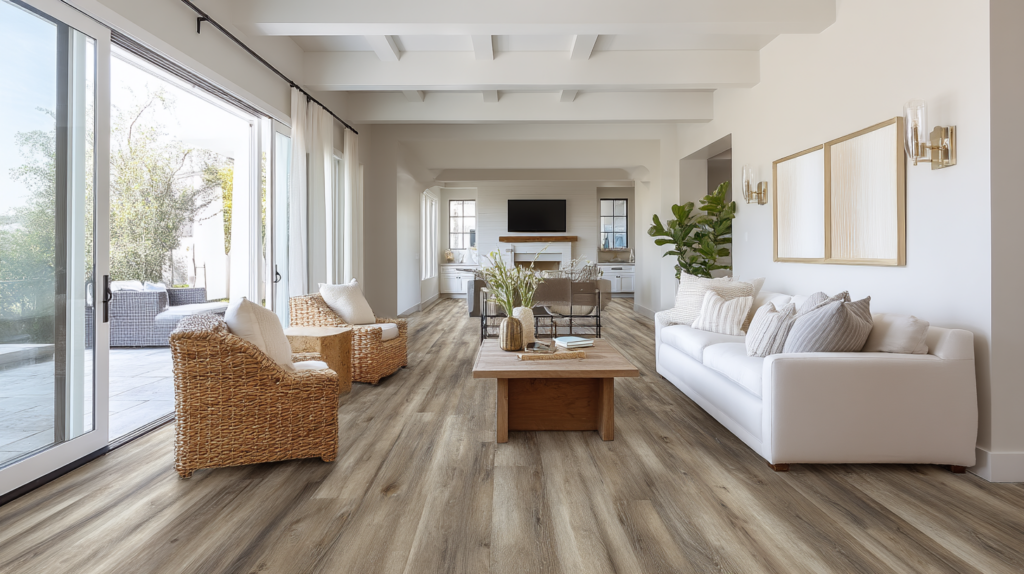
Waterproof LVP is the easiest hard surface flooring to maintain. The LVP care and maintenance page covers the full routine, but the basics are simple.
- Sweep or vacuum daily in high-traffic areas
- Damp mop weekly with a microfiber pad and pH-neutral cleaner
- Wipe spills as you notice them
- Skip the steam mop, even on waterproof products
- Use entry mats at every exterior door
The biggest mistakes we see are over-cleaning with harsh chemicals and steam mopping, both of which void most warranties.
Warranty Reality Check
Manufacturer warranties on waterproof LVP run from 15 years residential to lifetime structural. The fine print matters more than the headline number. The waterproof flooring warranty guide walks through the language to look for.
Common exclusions across most brands:
- Damage from steam mops or pressurized cleaning
- Standing water from appliance leaks (varies by brand)
- Subfloor damage from water that passed through the floor
- Sun-related fading without UV warranty
- Improper installation, including missed expansion gaps
Read the warranty before you sign the contract, not after the spill happens.
When to Pick Something Other Than LVP
LVP is the right answer for most moisture-prone rooms, but not every room. Consider alternatives when:
- You want a hardwood premium for resale in a high-end neighborhood, where engineered hardwood may pay back better
- You have a sunroom with intense direct sunlight, where laminate or tile may resist warping better
- You want the firmest possible underfoot feel, where laminate or hardwood feels more substantial
- Your room is below 60 square feet of dry, low-traffic space, where almost anything works
For a neutral comparison across all five flooring categories, our five-way flooring comparison hub covers when each material wins.
Frequently Asked Questions
Is all luxury vinyl plank waterproof?
No. Most modern LVP is waterproof, but some older or budget-tier flexible vinyl is only water-resistant. Check the box for waterproof, not water-resistant. The waterproof versus water-resistant guide covers the difference.
How long does waterproof LVP last in a residential home?
Twelve-mil residential LVP lasts 15 to 20 years. Twenty-mil products run 20 to 25 years. Twenty-eight-mil commercial-grade installed in a home often runs past 25 years because the wear layer is overbuilt for residential use.
Can waterproof LVP be installed in a basement?
Yes, and it is the most common product we install in basements across Buncombe and Henderson counties. A vapor barrier on the concrete slab is required, and SPC products handle slight slab unevenness better than other constructions.
Does waterproof LVP work for full bathrooms with showers?
Yes. The plank itself handles standing water, splash, and humidity. The install needs proper sealing around the toilet flange, tub, and shower base, and the subfloor underneath needs vapor protection. Most installers recommend professional installation for full bathrooms.
What thickness should I buy for a kitchen?
Twenty-mil wear layer is the kitchen sweet spot. Twelve-mil works for light cooking households. Twenty-eight-mil is overkill for most homes but worth it for vacation rentals or homes with multiple large dogs.
Will waterproof LVP add value to my home?
Mid-grade and premium waterproof LVP installed cleanly carries a small resale premium over older flooring in mid-range Asheville neighborhoods. Real hardwood still leads on resale in higher-end markets. The flooring resale value analysis covers the data.
Can I install waterproof LVP myself?
Yes, with realistic expectations. The first three rows determine the alignment of the entire room and trip up most first-time DIY installers. Subfloor prep, acclimation, and expansion gaps are where DIY jobs fail. Small rooms (under 200 square feet) are reasonable. Whole-floor projects benefit from professional crews.
What is the difference between waterproof LVP and waterproof laminate?
LVP is waterproof from top to bottom. Waterproof laminate is surface-waterproof with sealed edges, but the HDF core can still absorb water from prolonged exposure. The waterproof laminate vs luxury vinyl comparison covers the differences in detail.
Summary
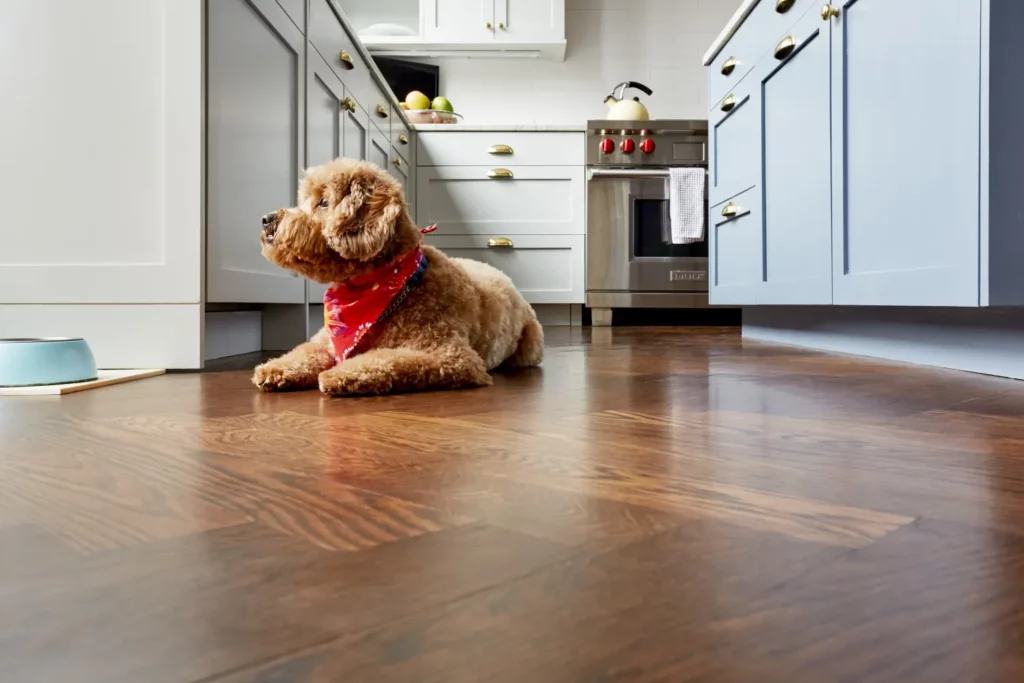
Waterproof LVP is the right answer for most Asheville and Hendersonville homes that want one durable, water-tolerant floor across kitchens, baths, basements, and main living areas. Pick the construction type (SPC, WPC, or rigid core) that matches your subfloor and feel preference. Pick wear layer thickness based on traffic level. Pick a brand based on warranty terms and visual style.
The biggest predictor of how long the floor lasts is not the brand or the price tag. It is the install quality, the underlayment, and how carefully the expansion gaps and transitions are handled. Pair a quality product with a careful install and your waterproof LVP will outlast most renovations the house ever sees.
Ready to compare planks in person? Schedule an appointment at our Asheville or Hendersonville showroom, or request a free in-home measure and we will bring samples to your space. For questions before then, contact our team any time.